
Showing posts with label Banking. Show all posts
Showing posts with label Banking. Show all posts
Sunday, February 12, 2012

Barclays reported a pretax profit of £5.9 billion for 2011, down 3% on the year and below analysts’ forecast of 6.1 billion.
Barclays said its key investment bank arm ended last year with its worst quarter for three years as the euro zone debt crisis hit bond trading activity, dragging the British bank’s annual profit down on the year before.
Barclays, Britain’s fourth-biggest bank by market value, on Friday reported a pretax profit of £5.9 billion ($9.4 billion) for 2011, down 3% on the year and below analysts’ forecast of 6.1 billion, according to a company poll.
Income at investment bank arm Barclays Capital fell to £1.8 billion in the fourth quarter, down 19% on the previous three months.
Read latest tutorials on education only At e-Students Guide (http://www.estudentsguide.com/)
Sunday, February 12, 2012 Comments
Monday, July 26, 2010

The council has already moved up the forecast for wholesale price inflation at the end of March 2011 from RBI’s 5.5% to 6.5%
The Prime Minister’s economic advisory council’s candid comments on the need for monetary tightening are clearly aimed at the Reserve Bank of India (RBI), which will hold its quarterly review of monetary policy on Tuesday. The council hasn’t toed the party line of a “calibrated exit” from monetary stimulus enthusiastically espoused by both the central bank and the government. Instead, it has said the recovery is strong and, therefore, “in the backdrop of inflation rates that are more than twice the comfort zone, it is important that monetary policy completes the process of exit…” It couldn’t have been more explicit.
The council has already moved up the forecast for wholesale price inflation at the end of March 2011 from RBI’s 5.5% to 6.5%. With expected inflation at 6.5% and the current repo rate at 5.5%, the policy rate is a negative 1%. So it’s hard to see how a policy of “calibrated exit” will work, especially since non-food manufacturing inflation was at 7.3% year-on-year in June. Deutsche Bank AG has a chart, reproduced here, that shows the gap between real growth and real interest rates is very high.
The stock market is, therefore, sanguine that high growth will offset any timorous attempts to tighten monetary policy, with none of the so-called rate-sensitive sectors showing any big changes in the run-up to the monetary policy announcement. While the Bombay Stock Exchange’s Sensex moved up 0.98% last week and 2.26% in the past one month, look at the gains in the rate-sensitive indices: the BSE Bankex up 0.83% last week and 4.52% in the past one month; the realty index up 0.72% and 9.47%, respectively, and the auto index up 0.92% and 1.56%, respectively. The yield on the benchmark 10-year government security is at 7.68%—here, too, the rise has been only 4 basis points in the past week. One basis point is one-hundredth of a percentage point. The markets love “calibrated” tightening.
Monday, July 26, 2010 Comments
Thursday, July 8, 2010

In efforts to play the role of a matchmaker, investment bankers are tracking some old pvt banks in the south. HDFC Bank Ltd, Kotak Mahindra Bank Ltd and IndusInd Bank Ltd. have set their eyes on acquisitions.
The Indian banking industry may see a few mergers and acquisitions (M&A) deals this year, ahead of the banking regulator releasing the licensing norms for new banks that are expected to open for business in the next two years.
At least three new generation private sector banks— HDFC Bank Ltd, Kotak Mahindra Bank Ltd and IndusInd Bank Ltd—have set their eyes on acquisitions.
It is not known whether they have given a mandate to investment bankers for such acquisitions, but some dealmakers are independently reaching out to potential acquirers with suggestions on possible targets.
At least one foreign bank is recommending stocks of some south India-based old private banks to its high networth clients for investment because it feels that the market value of these banks will substantially go up once they are actively wooed by the new generation banks for possible acquisitions.
Addressing shareholders at HDFC Bank’s annual general meeting last week, managing director and chief executive officer Aditya Puri said he would look for a merger with a bank in the southern part of the country.
Kotak Mahindra Bank has already created a war chest for acquisitions by selling 4.5% stake in the bank for $296 million (around Rs1,400 crore today) to Sumitomo Mitsui Financial Group Inc. Its vice-chairman and managing director Uday Kotak has previously said that he is “sniffing around” for acquisitions.
Kotak recently conducted due diligence on CitiFinancial Consumer Finance India Ltd (CitiFinancial) that gives home and personal loans to retail borrowers in the low income segment, but the deal did not go through. It is now looking closely at a south India-based old bank, an executive at another bank said, asking not to be identified.
There have been talks in investment banking circles that IndusInd Bank, too, is actively looking at some proposals.
Its managing director and chief executive officer Romesh Sobti told Mint his bank is “open to acquisitions as we now feel we have the financial muscle and required managerial skill to look at opportunities”, but declined to divulge details.
An official of the Hinduja group, of which IndusInd Bank is a part, speaking on condition of anonymity said the bank has not appointed any investment banker as yet, but had received a proposal from one investment bank. “We are open for inorganic growth options if we get the right opportunity at the right price,” he added.
IndusInd Bank had acquired Ashok Leyland Finance Ltd, also part of the same group, in April 2003.
Investment bankers are closely tracking some old private banks, such as City Union Bank Ltd, Karnataka Bank Ltd, Federal Bank Ltd, Karur Vysya Bank Ltd, South Indian Bank Ltd and the unlisted Catholic Syrian Bank Ltd. These may or may not be available for acquisitions, but investment bankers are talking to most of them in their efforts to play the role of a matchmaker. Federal Bank is the most valuable among them with a market capitalization of close to Rs6,000 crore.
Once the new banks open for business, competition will intensify and many of these banks may find it difficult to grow; new generation private banks are aggressively looking at opportunities to expand their branch network and widening their presence pan India.
ICICI Bank Ltd, India’s largest private sector lender, is in the process of acquiring Bank of Rajasthan Ltd for its 463 branches. ICICI Bank had earlier acquired Bank of Madura Ltd and Sangli Bank Ltd, again for their branches, and their presence in southern and western India, respectively.
HDFC Bank has acquired two banks in the past—Times Bank Ltd and Centurion Bank of Punjab Ltd.
“Most of the south-based private sector banks fit the bill in terms of providing scale and penetration,” said the MD and CEO of a private sector bank, speaking on condition of anonymity as his bank is also looking for possible acquisitions.
His bank is not one of the three banks named in the beginning of this story.
However, analysts and consultants said the task will not be easy as many of these banks have a dispersed ownership and active trade unions.
“The issue with some of the listed south-based banks is that they have a dispersed shareholding. In the presence of a dominant shareholder, negotiations becomes easier, but in cases where the holding is scattered, (getting) everybody on the (same) page becomes very difficult,” said Bobby Parikh, managing partner of tax consultancy BMR and Associates.
Unionized employees, typically, oppose any merger for fear of losing their jobs, but in most cases despite their opposition, the mergers go through. The employees of the erstwhile Lord Krishna Bank Ltd had opposed its merger with Centurion Bank of Punjab and delayed it by a year, but could not stall it. After this merger, Centurion Bank of Punjab was acquired by HDFC Bank.
G. Chokkalingam, director and head (research and strategy) at Barclays Wealth India, said there are seven-eight listed old generation private sector banks, which have grown rapidly in the last six-seven years and “they do not have any identifiable promoter”.
“The entity who gets the banking licence will take at least one-two years to set up shop. In anticipation, we can see some of the players acquiring strategic stake in some of these old private sector banks,” he added.
Some of the companies that aspire to float banks already hold stakes in some old private banks. For instance, Larsen and Toubro Capital Holding Ltd holds 4.81% stake in City Union Bank and 4.68% in Federal Bank. Tata Capital Ltd holds 3.29% stake in Development Credit Bank Ltd and Reliance Capital Trustee Co. Ltd holds 1.14% stake in Dhanalakhmi Bank Ltd.
“The latest acquisition in old private sector banking space (Bank of Rajasthan) has taken place at 5.5 times adjusted bookvalue. Whereas few high quality, fast growing banks in this space are available around two times their adjusted book value... We find this segment still quite attractive,” said Chokkalingam.
Analysts find these banks an attractive proposition for potential buyers as their customer focus is largely on small and medium enterprises, which will drive asset growth in the future.
Thursday, July 8, 2010 Comments
Sunday, July 4, 2010
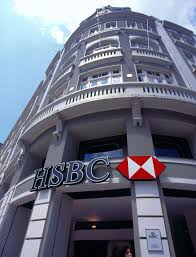
HSBC to pay up to $95 million over asset value of businesses; this deal continues RBS’s retreat from non-core countries
London/Mumbai: HSBC Holdings said it would buy the Indian retail and commercial banking businesses of Royal Bank of Scotland as the part-nationalised UK bank continues its retreat from overseas markets.
HSBC said it would pay a premium of up to $95 million over the tangible net asset value (TNAV) of the businesses when the deal is completed, probably in the first half of next year.
The price will be reduced if bad debts in the business increase during the next two years.
The deal could end up being neutral or even costing RBS, as the TNAV could be near neutral or negative and a deterioration in bad debts in the next two years could wipe out the premium.
Overseas lenders have been stepping up their presence in India, a fast-growing market that restricts foreign participation in banking.
This week, Japan’s Sumitomo Mitsui Financial Group agreed to buy 4.5% of mid-sized Indian lender Kotak Mahindra Bank for $296 million.
HSBC, Standard Chartered and Citigroup have the biggest presence in India among foreign lenders.
RBS, 83% owned by the UK government, has sold a string of small non-core businesses in recent weeks as it refocuses on its key strengths.
It is reversing a decade-long international expansion drive and has raised over $2.5 billion from exiting or selling over 20 businesses in the last 14 months.
It will still have a presence in Asia’s third-largest economy.
“Our commitment to our wholesale and investment banking, transaction services and private banking businesses in India remains unchanged,” said Madan Menon, RBS’ India head of global banking and markets.
HSBC is buying operations from RBS with 1.1 million customers, over 1,800 staff and 31 branches. The portfolios had a gross asset value of $1.8 billion at the end of March.
HSBC currently has about 2 million customers and 50 branches across 29 cities in the hard-to-enter Indian market.
India’s central bank limits the participation of foreign lenders in the country, but many overseas banks have been looking to enter or expand their presence in a country on track to grow by more than 8% this year.
Last week, Dutch lender Rabobank moved a step closer to setting up its own banking unit in India by cutting its stake in midsize local lender Yes Bank.
Goldman Sachs has applied for a banking licence in the country, while Australia and New Zealand Banking Group is planning a return to India after a 10-year absence.
UK-based Standard Chartered recently raised $530 million in the first-ever issue of Indian depositary receipts (IDRs), move that was less about raising capital than about boosting its profile in India.
Sunday, July 4, 2010 Comments
Wednesday, June 30, 2010

The European Central Bank lent banks 131.9 billion euros (USD 161.4 billion) in three-month funds on Wednesday, below expectations, as banks face the repayment of close to half a trillion euros in 12-month funds.
The ECB said 171 banks borrowed funds at a flat rate of 1% in the operation, which was below expectations in a Reuters poll for demand of 210 billion euros.
The amount is still the highest ever borrowed in a three-month operation but pales beside the 442 billion euros which 1,121 banks must repay to the ECB on Thursday.
The ECB's first-ever one-year loans part of the emergency support it put in place at the height of the financial crisis are not set to be renewed.
The relatively low demand should help ease concerns about bank finances which have rocked stock markets this week.
Analysts had said high demand would send a warning signal, given the ECB is charging a relatively high interest rate compared to market rates.
But it means there is a risk liquidity supplies will drop sharply on Thursday, potentially putting upward pressure on interest rates, although banks also have the chance to borrow unlimited six-day funds at a special operation.
Banks in countries including Greece, Spain and Portugal are increasingly dependent on the ECB for funding as they struggle to borrow from others due to concerns over debt and public finances.
Wednesday, June 30, 2010 Comments
Tuesday, June 29, 2010

Mumbai: ICICI Bank on Monday said it would announce its base rate on June 30. The bank also recommended a dividend of 120 per cent at its annual general meeting (AGM) on Monday.
"We just concluded our annual general meeting which saw all resolutions being passed unanimously. We have recommended a dividend of 120 per cent," Chanda Kochhar, managing director and CEO of ICICI Bank, told reporters on the sidelines of the AGM in Vadodara.
Later in the day, speaking in Mumbai, Kochhar said the bank would announce its base rate on June 30. The current rates would be "adjusted according to the base rate," she said after the board meeting in Vodadara. The base rate regime comes into effect from July 1.
According to Kochhar, the dividend recommendation is a result of a rise in the group's consolidated profits. "Our subsidiary, ICICI Life Insurance, has earned profits for the first time in financial year 2009-10, which is a year earlier than we expected," she added.
Meanwhile, ICICI brand had been rated among the Top 50 Global Brands and valued at $ 14.5 billion by BrandZ, a brand management firm, Kochhar said at the AGM.
ICICI Bank, whose extraordinary general meeting had approved the amalgamation of Bank of Rajasthan (BOR), registered profit after tax of Rs 4,025 crore for financial year 2009-10 as against Rs 3,758 crore for 2008-09. The bank booked a consolidated profit after tax of Rs 4,670 crore.
Business Standard
Tuesday, June 29, 2010 Comments
Subscribe to:
Posts (Atom)