
Showing posts with label Guidance. Show all posts
Showing posts with label Guidance. Show all posts
Monday, July 26, 2010

Diversification is a strategy to reduce a portfolio's exposure to risk by investing across different asset classes. Investments like stocks, bonds and real estate respond differently to different economic situations. So, if an asset class is not performing well, your entire portfolio is not affected.
The aim of a well-diversified portfolio is to mitigate risk, yield stable returns and provide ample liquidity. It is unwise to put all your eggs in one basket. Diversification involves investing your money across various asset classes.
Here are a few pointers for a well-diversified portfolio:
The aim of a well-diversified portfolio is to mitigate risk, yield stable returns and provide ample liquidity. It is unwise to put all your eggs in one basket. Diversification involves investing your money across various asset classes.
Here are a few pointers for a well-diversified portfolio:
Balance investments:
Have you invested heavily on a particular stock? If so, you are taking a tremendous risk. Reduce the size of any large investment that could pull down the performance of your entire portfolio.
Tread with caution when it comes to adding risky investments to your portfolio.
Balance risk and goal:
Your goal, risk appetite and investment objectives determine the extent of diversification. Diversify across different asset classes. Is your portfolio over-weighed by bonds?
Consider increasing exposure to other asset classes like stocks, precious metals and real estate. A well-diversified portfolio will not be drastically influenced in value and returns under fluctuating economic conditions.
Diversify within asset class:
Take for instance stocks. You can invest across different sectors like FMCG, pharma, bio-technology, energy, BFSI and utilities.
So, if banking sector is undergoing a lull, it wouldn't adversely reflect on your portfolio performance. Similarly, invest across different market caps.
Allocate percentage:
A general guideline is to allocate the same percentage of your corpus as your age to conservative investments like bonds and the remainder to riskier assets like stocks. If you are 30 now, invest 30 percent in bonds and the rest in stocks.
This guideline merely indicates that you must invest in high risk, high returns instruments when young and migrate to low risk, stable returns as you grow older. Professionally-managed mutual funds are a good choice for investors who do not have time for market research.
Dangers of over diversification: Over diversification could start adversely impacting your portfolio's returns. If you are invested in stocks of 10 different companies that are from across different sectors that have low correlation, your portfolio is well-diversified.
On the contrary, if your portfolio contains stocks of 25 different companies, your portfolio could be plagued by excessive diversification. While you wouldn't be impacted by a fall, you wouldn't gain much either in good time. Further, it is difficult to manage and keep track of numerous stocks and investments in an over-diversified portfolio.
Tread with caution when it comes to adding risky investments to your portfolio.
Balance risk and goal:
Your goal, risk appetite and investment objectives determine the extent of diversification. Diversify across different asset classes. Is your portfolio over-weighed by bonds?
Consider increasing exposure to other asset classes like stocks, precious metals and real estate. A well-diversified portfolio will not be drastically influenced in value and returns under fluctuating economic conditions.
Diversify within asset class:
Take for instance stocks. You can invest across different sectors like FMCG, pharma, bio-technology, energy, BFSI and utilities.
So, if banking sector is undergoing a lull, it wouldn't adversely reflect on your portfolio performance. Similarly, invest across different market caps.
Allocate percentage:
A general guideline is to allocate the same percentage of your corpus as your age to conservative investments like bonds and the remainder to riskier assets like stocks. If you are 30 now, invest 30 percent in bonds and the rest in stocks.
This guideline merely indicates that you must invest in high risk, high returns instruments when young and migrate to low risk, stable returns as you grow older. Professionally-managed mutual funds are a good choice for investors who do not have time for market research.
Dangers of over diversification: Over diversification could start adversely impacting your portfolio's returns. If you are invested in stocks of 10 different companies that are from across different sectors that have low correlation, your portfolio is well-diversified.
On the contrary, if your portfolio contains stocks of 25 different companies, your portfolio could be plagued by excessive diversification. While you wouldn't be impacted by a fall, you wouldn't gain much either in good time. Further, it is difficult to manage and keep track of numerous stocks and investments in an over-diversified portfolio.
Monday, July 26, 2010 Comments
Sunday, July 4, 2010

So this is the way the quarter ends: not with a whimper but with a bang.
First investors had their hair set on fire by the "flash crash" of May 6. Then came the jolt of June, as stocks lost another 5.2% and finished the month with five down days in a row.
As usual, the markets made a monkey out of anyone who had been certain about what had to happen next.
Europe is in worse shape than the U.S., said the consensus this spring—and, right on cue, European stocks outperformed the U.S. market sharply in June. Treasury securities, legions of experts declared earlier this year, were doomed to lose money—and promptly boomed, with long-term U.S. government bonds gaining 8% last month and 23% year-to-date. And even as the housing market faltered again, real-estate stocks did slightly better than U.S. equities overall.
Meanwhile, volatility burst back onto the scene. The widely followed "fear gauge"—the CBOE Volatility Index, or VIX—nearly tripled from April to May, after a long decline from the jagged days of late 2008 and early 2009. After falling back in early June, the VIX spiked again in the final days of the month.
Investors have taken note. On June 30, according to IndexUniverse.com, iPath S&P 500 VIX Mid-Term Futures, which tracks futures contracts on the volatility index, was the fastest-growing exchange-traded product in the country. It grew by 25% on that day alone, taking in $128 million from investors hoping to profit from the spike in turbulence. The iPath instrument has returned 9% over the last month and was up 46% in the second quarter, according to Morningstar, the investment-research firm.
Meanwhile, although figures aren't in yet for June, trading activity by clients at Charles Schwab was up 17% in May from April—which, in turn, was up 12% over March. At TD Ameritrade, the average number of daily transactions has grown at about 14% over the same period. "There are more people trading," says Jay Pestrichelli, a managing director at TD Ameritrade, "and there are more people trading options to try to take advantage of volatility."
Before you join the crowd trading on turbulence, there are a few things you should know.
First, while volatility provides a close mirror image of current returns, it is a poor forecaster of future returns. Robert Engle, a finance professor at New York University who shared the 2003 Nobel Prize in economics for his research on volatility, warns that "there really isn't any predictability in that direction." He explains, "Even though volatility tends to be high in bad markets, that doesn't mean the market is going to keep going down—it just means the market has been going down."
Prof. Engle adds that periods of high—or low—turbulence don't persist indefinitely. "When you're in a stormy period, there is a tendency for the storm to end," he says. "But it's not a very strong effect, and it can take a long and uncertain time." It is possible to forecast volatility "in general," says Prof. Engle, "but there's a lot of uncertainty around those forecasts."
In short, "volatility has a volatility of its own," says finance professor Robert Schwartz of Baruch College at the City University of New York. That is precisely why the prices of the various products based on the VIX vary drastically over time.
Just as you are likely to add earthquake coverage to your insurance policy after—but not before—the ground has been shaken, the VIX typically goes up as stocks go down, and vice versa.
Investors have a chronic habit of chasing any asset that rises and fleeing it when it falls, even though they should become less willing to buy into whatever grows more expensive and more eager to pick up whatever gets cheaper. (Just think of how much happier you were to hold stocks three years ago than you are today.) The surging interest in trading on turbulence seems to be working much the same way. As volatility has become more costly to "own," more people want to buy it. When it was cheaper, it went begging.
There is little doubt that adding some volatility insurance to your portfolio is a good idea. But the time to do so is when most other investors have no interest in it—not when it is in the midst of a sudden burst of popularity. If you want to capitalize on volatility, wait until markets are calm, not stormy, and the prices of the various VIX products come down. Right now, Prof. Engle says, "it's insurance, but it's gold-plated insurance."
Sunday, July 4, 2010 Comments
 Want to make money off India's infrastructure boom?
No, you can't invest in the $11 billion fund which the government recently said it would set up to finance India's much-needed infrastructure development. That fund will be available only to large institutional investors like insurance companies, pension funds, and so on.
For individuals who want to participate in India's infrastructure growth story, the options are limited. The wealthy -- with 1,000,000 rupees or more to invest -- can buy directly into infrastructure projects through private equity and venture capital deals. For the rest of us, buying stocks of infrastructure companies is the best bet. Some infrastructure bonds are also expected to come to market over the next few months but their returns may be fixed and thus not be tied directly to infrastructure growth.
The case for investing in India's infrastructure is obvious: to keep the economy growing at a rate of 8% or more, we need to build roads, generate more electricity and provide more water to all of India. And we need to do all of this pretty quickly. So, barring some unforeseen economic setbacks, it's fair to expect that companies involved in the infrastructure space will grow at double-digits rates.
To get exposure to this growth, consider buying a mutual fund which invests solely in infrastructure-related stocks. A fund is a better bet than buying individual stocks because funds invest in a number of companies and thus reduce the risk that one company's failure could decimate your portfolio.
There are around a dozen infrastructure open-ended mutual funds in India, and the number is growing. The most recent entrant was Baroda Pioneer Infrastructure Fund, launched last month.
The definition of what sectors are included in infrastructure is loose but they typically include companies tied to transport such as roads, airports and ports, power and engineering companies, and also construction-related companies. Some money managers consider banks also as part of infrastructure because they provide financing to these projects.
Fund managers say in recent months more and more projects are being undertaken which should boost the earnings of these companies. Srividhya Rajesh, manager of the Sundaram BNP Paribas Capex Opportunities fund, says that some medium and small companies today have orders in hand which are three to five times their current year's sales, making them attractive investments.
The Sundaram fund has 5 billion rupees ($110 million) under management, and it has returned 8.8% annually for the three years ended Thursday, according to data firm Value Research India Pvt Ltd. In comparison, Bombay Stock Exchange's 30-share Sensex has gained 5.3% over the three years through Thursday.
Anand Shah, manager of the Canara Robeco Infrastructure fund, likes oil and gas companies, especially government-run oil marketing companies, because they will benefit from upcoming reforms. Mr. Shah believes that the government will, in some form, follow the recommendations of the Kirit Parikh Committee report which suggests that Indian oil companies be allowed to charge prices which are tied to international prices.
Mr. Shah's fund has 2.6 billion rupees ($58 million) under management, and it has earned around 12% over the last three years, according to Value Research.
The potential of infrastructure companies has not been overlooked by other investors, who've been piling into these stocks lately and pushing up their prices. "At current valuation, one needs to be cautious on infrastructure," says Mr. Shah.
Individuals would be best off investing in a "systematic investment plan" in which they periodically put small amounts of money into a mutual fund over a period of time. That way, investors capture any dips that may come in the broad stock market.
To be sure, infrastructure investing is not for everyone. Like other "sector" or "thematic" funds, infrastructure funds are more risky than a diversified fund because their fate is tied to a narrow sphere of companies. Typically, the fortunes of infrastructure companies are dependent on the economic cycle; they do well when the economy is expanding and vice versa. In 2008, when the Indian economy slowed due to a global crisis, infrastructure companies, and in turn the mutual funds which bought them, lost more than the broad market.
The bottom line: Investors need to approach this investment with a long-term mindset. "You might end up losing a lot of money if you don't stay through the cycle," says Mr. Shah.
Ideally, you want to allocate only 2% to 3% of your overall portfolio to a sector fund like this.
If you don't want to take the risk of investing in the stock market at all, you can watch out for some infrastructure bonds that are expected to be issued this year. Finance Minister Pranab Mukherjee announced earlier this year that investments of up to 20,000 rupees ($450) into some types of government-specified infrastructure bonds can be deducted from your taxable income.
While we have no further details about these bonds yet, based on some similar bonds issued in the past, financial advisers expect that they will require a lock-in of five years or more and could carry an interest rate which is one to two percentage points lower than the prevailing interest rate on comparable bonds or fixed deposit programs because of the tax benefit. Most likely, the government will issue these closer to the end of the year when people are thinking about tax-savings.
Vivek Rege, a financial planner in Mumbai, expects that these bonds will see a huge response but not necessarily because they are tied to infrastructure. People "will put blindly into anything which gives them a tax deduction," says Mr. Rege.
If that money can help get us better roads and ports, I'm not complaining!
Tuesday, June 29, 2010
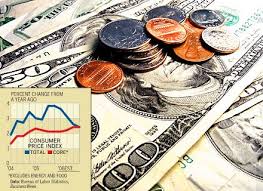
“Inflation for the week ending July 26, 2009 is 0.17%” or
“Prices of vegetables reach sky high” are some of the headlines that we come across everyday in our newspapers. So it becomes important for us to understand what inflation is and how it affects our life. It is also important for us to know how to beat this deadly killer.
Inflation and its effect on our lives
Assume the price of 1 kg of tomatoes is Rs 14. If after a month, the price of the same amount of tomatoes becomes Rs. 18, we can say the price of the tomatoes has gone up. This price rise is called as inflation. It is a deadly killer that erodes the value of money, as you are paying more for the same quantity of goods. But not only that, it also erodes the value of our investments and makes all the goods and services beyond the reach of the common man.
Effect of inflation on investments
Our investments are heavily affected by inflation. Assume you have opened a bank deposit offering you 6% interest for one year. Now while closing the deposit account, if the inflation is 8%, you actually end up losing 2% (8-6). It means your investment has lost its value. In order to protect the value of your indexation, you have to use the power of indexation.
Concept of inflation index
The indexation uses the concept that as the inflation erodes the returns from the investment; you should be made to pay tax only on the actual profit made on the investment. To help in calculation of the actual profit earned on the investment, the government has prepared an index known as the cost of inflation index. This index uses 1981-82 as its base, and its value is fixed to be 100. Now for each financial year, this value is declared. This gives you the choice of paying long-term capital gains at 20% along with indexation benefits. Alternately you can pay long-term capital gains tax at the flat rate of 10%.
Calculating capital gains
In order to calculate the profit earned on which the tax should be paid, the ratio of the inflation index when the sale occurs to its value when the purchase is made and is multiplied by the purchase price of the asset. It helps you calculate the indexed cost of acquisition, which is then deducted from the selling price. E.g. you bought an asset for Rs 100 in 2000, when the inflation index was 150. You sold it in 2005 when the inflation index was 300. The ratio of the inflation index when the sale occurred is 300/150 = 2. The indexed cost of acquisition is Rs. 100 x 2 = Rs. 200. The capital gains here are Rs. 300 - Rs. 200 = Rs.. 100. This is the amount on which you will actually be paying tax. Since the indexed cost of acquisition is based on the ratio of the cost inflation index, while actually selling the asset, the tax you actually pay will decrease as this figure increases. As the time passes, the inflation also goes up, thus reducing the taxable amount. If the profit earned is very small, you may not actually have to pay any tax, as all your gains are offset by the rising inflation.
Benefiting from indexation
The most common methods of benefiting from indexation is to prolong booking profits, such that it spreads out over two financial years. This lets you enjoy the indexation benefit for 2 years in one shot. Also remember the indexation benefit can be enjoyed in instances where a long-term capital gains is obtained. Here debt mutual funds score over FDs and bonds, which attract the tax as high as 33%. Also the total income is taxed in case of bonds and FDs but in case of debt funds, it is only the profit is taxed. Also if you opt for systematic withdrawal plan, the total taxable income also reduces, as the capital decreases.
Inflation is a major destroyer of wealth, as it greatly affects your returns. To beat inflation, it is important to benefit from the power of indexing. It lets you reduce your tax liability after taking into account the inflation, and pay tax only on the actual gains you earned. Also remember, longer you remain invested, lower the tax you pay as inflation goes on increasing over the period of time. Besides choose tax-efficient investment options like mutual funds to reduce your tax liability and beat inflation.
Tuesday, June 29, 2010 Comments

For centuries gold has been the ultimate cushion against the dangers of stocks price falls, fluctuating rate changes, inflation, rising/falling real estate prices, natural calamities, wars and more. Gold has been the best way to safeguard your investments against unstable financial markets.
Why is gold such a good investment?
Whether or not gold is a good investment, is a question that does not have a simple answer. Gold has appreciated substantially over the past couple of years. The growth rate of late has been much higher than the conventional rate of appreciation. However, if we look at the past 15-20 years record, it is seen that Gold is a hedge against inflation. Over the last 20 years, the average return from Gold has been around 7%. So, if the past trend continues, one could expect around say 6-9% returns from gold in the long-term.
Also, another aspect that we should look at is a weakening currency. No matter which country you originate from, there is a chance that your country’s currency will suffer a downfall at a particular point of time. Gold, on the other hand, retains its true value and can help you protect your riches because it does not rely on the state of the country’s economic, whether it is on the up or downtrend. Therefore, investing a small portion of one’s investment portfolio in gold would be a good idea.
How can one invest in gold?
Gold can be bought in various forms and the decision should be based on the reason you need gold. If you see this purely as an investment, you can either buy it in the form of physical gold — bars, biscuits and or coins or even in a dematerialized form.
For most Indians, gold purchases usually mean buying jewellery. However, the disadvantage of buying gold in the form of jewellery is that its resale is not always a profitable proposition.
Here are some other ways of investing in gold:
Gold ETFs
You can invest in gold by buying Gold Exchange Traded Funds (ETFs). Being ETFs, these funds are listed and traded on the stock exchange i.e. investors can buy and sell them like any other stock on the stock exchange, on a real- time basis. All you need is a demat account and a share trading account with a broker or sub-broker who deals in stocks. These are traded in units of one. That means you can buy one or more units at a time. Each unit represents approximately the market value of one gram of gold.
Gold ETFs are traded close to real-time gold prices in the market, that is, ETF prices move up and down with the market price of gold in the conventional marketplace. Your expenses in an ETF would be very low: you would pay securities transaction tax (STT), brokerage /service tax, and the like, which are unlikely to exceed around 1% of market price. You’d hold gold in demat form in your demat account, just as you hold shares. If you decide to sell your ETF units, you can do so through your stock broker or sub-broker and the charges would be the same as what you paid while buying the ETF. Thus an ETF is very convenient, and you need not worry about the purity of the gold, secure storage, insurance against theft, and so on.
Physical gold
This is the traditional way to invest in gold. Investors can buy gold and then store it in a bank’s locker. If you are one of those people who keep buying gold jewellery for a marriage of a daughter or son, a better option would be to buy gold ETF units now at the current price of gold, hold them in your demat account, and sell them in the future, whenever you want, and use the money to buy jewellery then. In this way, you will be protecting yourself from rising gold prices, while also sparing yourself anxiety about the purity and safety of your gold. You can keep accumulating gold at a slow rate, perhaps even one gram at a time.
It is evident that gold is an asset class that you can rarely go wrong with. Therefore, think seriously about investing in gold.

New Delhi: The popular perception is that companies in India are taking jobs away from Americans but the numbers on the ground tell a different story.
In the last five years alone, 90 Indian companies have created 16,576 jobs in the US by investing $5.5 billion in new companies and saved over 40,000 jobs by making 372 acquisitions and investing $21 billion (for 272 deals).
These were some of the interesting findings of a recent study on How America Benefits from Economic Engagement with India by the India-US World Affairs Institute of Washington, the Robert H Smith School of Business, University of Maryland and the Federation of Indian Chambers of Commerce & Industry.
These were some of the interesting findings of a recent study on How America Benefits from Economic Engagement with India by the India-US World Affairs Institute of Washington, the Robert H Smith School of Business, University of Maryland and the Federation of Indian Chambers of Commerce & Industry.
Authored by Professor Vinod Jain of the University of Maryland and Kamlesh Jain, director of research & education at the India-US World Affairs Institute, the study covers India's foreign direct investments into the US and US exports to India, as well as an assessment of their impacts on the American economy.
Indian companies have been investing abroad, including in the US; with the rise of India Inc., the magnitude and impact of such investments have increased. Some Indian companies to which work was being outsourced earlier are now 'insourcing' such jobs within the US itself, using American workers to perform value-added work.
More than two-thirds of the $5.5 billion of the greenfield investments in the US were made by 10 companies: Essar Steel, JSW Steel, TCS, Welspun Group, Reliance Adlabs, Indage Group, HCL, Flag Telecom, RIL, and Tata Communications. Over 40,000 jobs were created or saved by 85 acquisitions (data for which was available); the number of jobs saved for 372 transactions would be much higher.
Between 2004 and 2009, US exports to India grew 269 per cent, while India's exports to that country grew 136 per cent. US exports to India have grown faster than exports to all other countries. In 2009, India was United States' 17th largest goods export market, and 15th largest supplier of goods imported into the US. Interestingly, in the 1700s, America traded more with India than with all of Europe combined.
The US exports high-tech products such as aircraft, electrical machinery, optic and surgical instruments, chemicals, plastics, pharmaceuticals, vehicles, and railway stock and traffic signal equipment. With the US-India civilian nuclear agreement, US exports to India are likely to grow even faster in the coming years, creating more jobs in the US.
Just manufactured exports to India were linked to 96,000 manufacturing and non-manufacturing jobs in the US in 2009, the study estimates. These numbers do not include agricultural, mining, and services exports, which have their own implications for jobs in the US. For instance, in 2007, the US exported services worth $9.4 billion to India, compared to the goods worth $15 billion that are the focus of this study.
The 2.57 million Indian-Americans also contribute to the US economy and society in many ways. According to a recent survey by the US Census Bureau, there were 231,000 businesses owned by Indian Americans in 2002, which employed 615,000 workers and generated over $89 billion in revenues. Indian immigrant entrepreneurs have founded more engineering and technology companies during 1995-2005 than immigrants from Britain, China, Japan, and Taiwan combined.
Currently, there are almost 10,000 Indian-American owners of hotels/motels in the US, who own 40 per cent of all hotels in the US and 39 per cent of all guest rooms, and employ over 578,600 workers. There are about 50,000 physicians (and 15,000 medical students) of Indian heritage in the US.
Education is one of America's finest exports. The foreign students who come for higher studies to the US not only bring talent, but also contribute to the US economy via tuition and living and other expenses. India has had the largest number of foreign students in the US among all countries of origin for eight years in a row. In 2008, there were 94,563 students from India, who contributed $2.39 billion to the US economy.
The other benefits of engaging with India include noble laureates like Har Gobind Khurana (Medicine, 1968), Amartya Sen (Economics, 1998), CEOs in several corporations like Indra Nooyi (PepsiCo), Vikram Pandit (Citigroup), educators like Pradeep Khosla (dean of engineering, Carnegie Mellon University), Nitin Nohria (dean, Harvard Business School), and journalists like Fareed Zakaria (editor, Newsweek), to name a few.
Business Standard
Friday, June 11, 2010

You may have stood outside, watched the dancers and wondered when was a good time to join the equity party. You may have taken a step forward, heard the thunderous music and then jumped backwards.
With the indices marking record highs in 2007, the equity party was certainly one where latecomers were kept out. Even as the party continues to be loud, don't be afraid to join in. But, be careful and don't get swept off your feet.
As the new year begins, let safety be your resolution. Stocks Catalog defines five ways of making equity investing safer.
1. Pick 'safe' stocks. Stock picks are paramount in any kind of market, and especially so in a market like ours that has had a significant run up. The market is now trading at around 20 times one-year forward earnings, an unprecedented level. Even at the best of times earlier, valuations have not exceeded 16 times one-year forward earning.
The first mistake to avoid is to assume that the cheapest way to enter this market is through initial public offers.
Says Gaurav Mashruwala, a Mumbai-based financial planner: "Many people say that the market is too expensive and putting money in an IPO would be cheaper. That is a wrong strategy. Companies just getting listed are more risky than established blue-chips."
The safest way to enter the market is by investing in large companies, ideally those that are part of the market index.
Once you gain some experience, you can diversify. Even then, it's better to stick to well-known players. Try and get research reports from reputed brokers. Learn to read balance sheets and understand the industry the company operates in. Ignore hype and, most importantly, do not depend on 'market tips' your friend always gives.
Another important factor to investing safely is knowing when to sell.
2. Read between the lines. Beware of hype. One of the recent trends to emerge from trading patterns in the last few months is that delivery-based transactions are sometimes less than half of actual volumes in the market.
This indicates that the price rise in a lot of stocks is purely speculative and not backed by any fundamentals. This is true even for large-cap, well-known stocks.
Try and understand the reason why certain scrips are gaining. Check data from the exchanges.
If volumes for delivery constitute a major portion of trades transacted during a period, it indicates genuine buying and selling. If only day traders or speculators are interested in the stock, you may be buying into an artificial demand.
As the Sensex reaches unthinkable levels, massive volatility is par for course. Do not get caught on the wrong foot.
3. Do not over-leverage. You had a good run last year and have substantially improved your portfolio. You wish you had more funds to make an even bigger killing. Your broker suggests margin trading. At just 10 per cent of the investment you get to take a position on a stock that is definitely going up. Sounds great? Well, resist.
Even brokers are of the opinion that the current market is not one for retail investors to try and test their skills in.
As our bonuses get increasingly aligned to foreign ones, short-term market movements will be driven by forces we cannot foresee or predict. Avoid buying stocks to trade them in a few days, and even more importantly, avoid over-leveraging yourself.
If your call goes wrong and you have utilized the margin trading facility, you will have to cough up the remaining 90 per cent overnight. You may have to liquidate other investments or even borrow at a higher cost to cover up the losses.
"Margin trading is not safe even in the most placid of market conditions. Though we do offer this facility, it is inadvisable to use it in the current market conditions. In 2008, we expect more volatility, not ideal conditions for a novice to leverage market positions," says the head of a large broking house.
4. Be vigilant. As more investors are entering the market, regulators, exchanges and depositories have been tightening the rules. However, this does not mean that all fraud is eliminated. Choose your broker carefully. If you are picking the stocks yourself, then you can go with the cheapest broker. If you are going to rely on your broker for investment advice, then choose one that has the best research capability.
Even if you have picked a reputed broker, be vigilant. After every buy or sell transaction, check your contract note. It should have the order number, trade number, trade time, quantity, price and brokerage, and should be signed by the authorised persons.
If you have an online broker, check your depository participant status. Shares must reach you on the second day after you have put in your buy order and cash must be in your account the second day after you sell.
Keep a daily check on your DP account even if you have not transacted. Sometimes brokers move your shares to their common pool and transact on them. Call them and ensure that they reverse this. If a record date for dividend payment has been set on the day your broker does this, you may lose the dividends.
5. Be diligent. The best way to ensure the safety of your money is to be diligent. Get yourself organised and keep your papers in order. If you are applying for an IPO, keep a copy of your application form and cheque.
If you are buying and selling through a broker, check your contract notes and file them away safely. If you have all your documents in one place, it is easy for you to spot fraud and take action against it.
Market regulator Securities and Exchange Board of India as well as the Bombay and National Stock Exchanges have investor complaint cells. You can write to them and follow up to ensure that action is taken against the broker or the registrar if you face problems with your transactions or IPO allotment. But, for this, you need to have all your evidence in place and in the right order.
Stockmarket investing is fraught with risks and not for the faint hearted. But facing the risk of an intelligent and calculated transaction going wrong is one thing, and having to lose your money because of greed or laxity is another.
If 2006 was a year when even your pet dog could stock pick and make a decent profit, 2007 has taught us that, ultimately, markets favour the intelligent. Indications are that 2008 will teach us more of this. Brace yourself and enjoy the party.
Friday, June 11, 2010 Comments
"Knowledge and human power are synonymous!"
Francis Bacon (1561 - 1626)
Francis Bacon (1561 - 1626)

The Internet has revolutionized the average investor's ability to seek and gain information and as the global economy and stock markets continue to mature, Stocks Catalog - "Learn how to Invest" - offers investors a direct link to investing knowledge.
In today's volatile markets it has become increasingly difficult for individual investors to achieve profitable results.
Access to sound financial advice from experts with a long-range understanding of market fluctuations can mean the difference between making and losing money.
In light of all the recent events and disclosures, investors cannot any more afford to be uneducated when it comes to their investing choices. Here at Stocks Catalog we offer to the investors a place to learn and share information based on independent solid knowledge.
Stocks Catalog, based on this solid and professional knowledge, offers a unique combination of services and immediate education at the investors fingertips.
Stocks Catalog provides both the novice and the experienced investor with the tools and resources to turn a profit in the financial markets.
Investors can learn everything there is to know from selecting a financial advisor to basic information on stocks and bonds and from the A to Z of investing to how to maximize profits.
Our profitable insight intends to not only provide you with our professional and expert advice on investments for beginners, but also aims to offer financial education and amazing new ideas for experienced investors.
Subscribe to:
Posts (Atom)