
Monday, July 26, 2010

The council has already moved up the forecast for wholesale price inflation at the end of March 2011 from RBI’s 5.5% to 6.5%
The Prime Minister’s economic advisory council’s candid comments on the need for monetary tightening are clearly aimed at the Reserve Bank of India (RBI), which will hold its quarterly review of monetary policy on Tuesday. The council hasn’t toed the party line of a “calibrated exit” from monetary stimulus enthusiastically espoused by both the central bank and the government. Instead, it has said the recovery is strong and, therefore, “in the backdrop of inflation rates that are more than twice the comfort zone, it is important that monetary policy completes the process of exit…” It couldn’t have been more explicit.
The council has already moved up the forecast for wholesale price inflation at the end of March 2011 from RBI’s 5.5% to 6.5%. With expected inflation at 6.5% and the current repo rate at 5.5%, the policy rate is a negative 1%. So it’s hard to see how a policy of “calibrated exit” will work, especially since non-food manufacturing inflation was at 7.3% year-on-year in June. Deutsche Bank AG has a chart, reproduced here, that shows the gap between real growth and real interest rates is very high.
The stock market is, therefore, sanguine that high growth will offset any timorous attempts to tighten monetary policy, with none of the so-called rate-sensitive sectors showing any big changes in the run-up to the monetary policy announcement. While the Bombay Stock Exchange’s Sensex moved up 0.98% last week and 2.26% in the past one month, look at the gains in the rate-sensitive indices: the BSE Bankex up 0.83% last week and 4.52% in the past one month; the realty index up 0.72% and 9.47%, respectively, and the auto index up 0.92% and 1.56%, respectively. The yield on the benchmark 10-year government security is at 7.68%—here, too, the rise has been only 4 basis points in the past week. One basis point is one-hundredth of a percentage point. The markets love “calibrated” tightening.
Monday, July 26, 2010 Comments
Friday, July 16, 2010

The letdown announced on Thursday stemmed from Google’s expanding payroll and a run-up in the US dollar that has been driven by fears that the euro will crumble if governments in Greece, Spain, Portugal and Italy default on their perilously high debts
San Francisco: Google Inc.’s second-quarter earnings missed analysts’ target as higher expenses and the fallout from the European debt crisis dragged down the Internet search leader.
The letdown announced on Thursday stemmed from Google’s expanding payroll and a run-up in the US dollar that has been driven by fears that the euro will crumble if governments in Greece, Spain, Portugal and Italy default on their perilously high debts.
The worries hurt Google because about one-third of the company’s revenue comes from Europe, and customer payments made with the euro translated into fewer dollars than a year ago. Even so, the currency squeeze wasn’t as severe as some analysts anticipated.
Meanwhile, Google is spending more to maintain its commanding lead in Internet search while it also tries to diversify by developing products in other promising niches such as online video and mobile devices. To help achieve its goals, the company added nearly 1,200 employees in the second quarter to end June with more than 21,800 workers.
Despite the rising expenses, Google’s net income rose at a fast clip as second-quarter revenue came in slightly above analysts’ forecasts. But the earnings growth wasn’t quite as robust as analysts had hoped, a factor that seemed to amplify investor concerns already weighing on Google’s stock price.
Google shares fell $20.49, or more than 4%, in extended trading Thursday after the release of results. Earlier, the company finished the regular session at $494.02, up $2.68.
Although Google remains the Internet’s most profitable company, investors have been fretting about signs of decelerating growth amid stiffer competition from Apple Inc., Facebook and Microsoft Corp. On top of those challenges, a showdown over online censorship in China that has muddied Google’s future prospects in the world’s most populous country.
Thursday’s report offered some encouraging news, though.
In a positive sign for the overall economy, marketers were willing to pay more for the online ads that generate virtually all of Google’s income, and people are clicking on the commercial messages more frequently. Those trends provide another indication that more companies and shoppers are feeling a little better as they recover from the worst economic downturn in more than 70 years.
“We are really pleased with the way we are performing in this economy,” Patrick Pichette, Google’s chief financial officer, said during a Thursday conference call with analysts. “That’s why we feel confident about the future.”
Google, which is based in Mountain View, earned $1.84 billion, or $5.71 per share, in the April-June period, up 24% from $1.48 billion, or $4.66 per share, a year ago.
If not for expenses covering employee stock compensation, Google said it would have made $6.45 per share. That figure was below the average estimate of $6.52 per share among analysts polled by Thomson Reuters.
Revenue climbed 24% to $6.82 billion, from $5.52 billion a year earlier. After subtracting commissions paid to its ad partners, Google’s revenue stood at $5.09 billion about $10 million above analyst projections.
In other key figure watched closely by investors, the number of revenue-generating clicks on Google’s ads in the second quarter increased 15% from the same time last year. The gain is in the same range as the increases in the past year.
The average price per ad click in the second quarter edged up 4% from last year, but it’s slower than the growth seen during the previous two quarters.
After clamping down on its costs most of last year, Google has been spending more freely because management believes the U.S. economy is steadily rebounding, with electronic commerce and the rest of the technology sector leading the charge.
Google has brought in nearly 2,000 employees during the first half of this year, through both recruitment and a flurry of mostly small acquisitions. The company’s spending on data centers and other projects known as capital expenditures totaled $476 million, more than tripling from the same time last year.
Pichette said the company plans to continue investing in more employees and technology as it tries to position itself to take advantage of an improving economy.
To help pay for its ambitions, Google said Thursday that it will take on significant debt for the first time in its six years as a public company, even though it has $30 billion in cash. The company’s board of directors approved a plan to borrow up to $3 billion.
Friday, July 16, 2010 Comments
Sunday, July 11, 2010
It's too early to say the economic crisis in Germany has passed because considerable risks to the recovery remain, the head of the Federal Labour Office, Frank-Juergen Weise, was quoted as saying on Saturday.
Weise told German newspaper Rheinpfalz am Sonntag that while developments on the labour market were better than expected, he was worried "the economic crisis is being declared over," he said in excerpts from an article due to appear on Sunday.
"There are still major uncertainties," Weise said.
Adjusted for seasonal swings, unemployment fell for a 12th straight month in June to its lowest level since December 2008. However, concerns about the outlook for 2011 cast some doubt over whether the jobless total could fall much further.
The German economy suffered easily its biggest postwar recession in 2009, shrinking by some 5%. Since then, an export-led recovery has enabled the country to make up a substantial portion of the ground lost in the slump.
Many analysts believe Europe's largest economy probably grew by at least one percent in the second quarter, accelerating from 0.2% in the January-March period. However, leading indicators suggest the recovery may slow in the months ahead.
Sunday, July 11, 2010 Comments
Thursday, July 8, 2010

In efforts to play the role of a matchmaker, investment bankers are tracking some old pvt banks in the south. HDFC Bank Ltd, Kotak Mahindra Bank Ltd and IndusInd Bank Ltd. have set their eyes on acquisitions.
The Indian banking industry may see a few mergers and acquisitions (M&A) deals this year, ahead of the banking regulator releasing the licensing norms for new banks that are expected to open for business in the next two years.
At least three new generation private sector banks— HDFC Bank Ltd, Kotak Mahindra Bank Ltd and IndusInd Bank Ltd—have set their eyes on acquisitions.
It is not known whether they have given a mandate to investment bankers for such acquisitions, but some dealmakers are independently reaching out to potential acquirers with suggestions on possible targets.
At least one foreign bank is recommending stocks of some south India-based old private banks to its high networth clients for investment because it feels that the market value of these banks will substantially go up once they are actively wooed by the new generation banks for possible acquisitions.
Addressing shareholders at HDFC Bank’s annual general meeting last week, managing director and chief executive officer Aditya Puri said he would look for a merger with a bank in the southern part of the country.
Kotak Mahindra Bank has already created a war chest for acquisitions by selling 4.5% stake in the bank for $296 million (around Rs1,400 crore today) to Sumitomo Mitsui Financial Group Inc. Its vice-chairman and managing director Uday Kotak has previously said that he is “sniffing around” for acquisitions.
Kotak recently conducted due diligence on CitiFinancial Consumer Finance India Ltd (CitiFinancial) that gives home and personal loans to retail borrowers in the low income segment, but the deal did not go through. It is now looking closely at a south India-based old bank, an executive at another bank said, asking not to be identified.
There have been talks in investment banking circles that IndusInd Bank, too, is actively looking at some proposals.
Its managing director and chief executive officer Romesh Sobti told Mint his bank is “open to acquisitions as we now feel we have the financial muscle and required managerial skill to look at opportunities”, but declined to divulge details.
An official of the Hinduja group, of which IndusInd Bank is a part, speaking on condition of anonymity said the bank has not appointed any investment banker as yet, but had received a proposal from one investment bank. “We are open for inorganic growth options if we get the right opportunity at the right price,” he added.
IndusInd Bank had acquired Ashok Leyland Finance Ltd, also part of the same group, in April 2003.
Investment bankers are closely tracking some old private banks, such as City Union Bank Ltd, Karnataka Bank Ltd, Federal Bank Ltd, Karur Vysya Bank Ltd, South Indian Bank Ltd and the unlisted Catholic Syrian Bank Ltd. These may or may not be available for acquisitions, but investment bankers are talking to most of them in their efforts to play the role of a matchmaker. Federal Bank is the most valuable among them with a market capitalization of close to Rs6,000 crore.
Once the new banks open for business, competition will intensify and many of these banks may find it difficult to grow; new generation private banks are aggressively looking at opportunities to expand their branch network and widening their presence pan India.
ICICI Bank Ltd, India’s largest private sector lender, is in the process of acquiring Bank of Rajasthan Ltd for its 463 branches. ICICI Bank had earlier acquired Bank of Madura Ltd and Sangli Bank Ltd, again for their branches, and their presence in southern and western India, respectively.
HDFC Bank has acquired two banks in the past—Times Bank Ltd and Centurion Bank of Punjab Ltd.
“Most of the south-based private sector banks fit the bill in terms of providing scale and penetration,” said the MD and CEO of a private sector bank, speaking on condition of anonymity as his bank is also looking for possible acquisitions.
His bank is not one of the three banks named in the beginning of this story.
However, analysts and consultants said the task will not be easy as many of these banks have a dispersed ownership and active trade unions.
“The issue with some of the listed south-based banks is that they have a dispersed shareholding. In the presence of a dominant shareholder, negotiations becomes easier, but in cases where the holding is scattered, (getting) everybody on the (same) page becomes very difficult,” said Bobby Parikh, managing partner of tax consultancy BMR and Associates.
Unionized employees, typically, oppose any merger for fear of losing their jobs, but in most cases despite their opposition, the mergers go through. The employees of the erstwhile Lord Krishna Bank Ltd had opposed its merger with Centurion Bank of Punjab and delayed it by a year, but could not stall it. After this merger, Centurion Bank of Punjab was acquired by HDFC Bank.
G. Chokkalingam, director and head (research and strategy) at Barclays Wealth India, said there are seven-eight listed old generation private sector banks, which have grown rapidly in the last six-seven years and “they do not have any identifiable promoter”.
“The entity who gets the banking licence will take at least one-two years to set up shop. In anticipation, we can see some of the players acquiring strategic stake in some of these old private sector banks,” he added.
Some of the companies that aspire to float banks already hold stakes in some old private banks. For instance, Larsen and Toubro Capital Holding Ltd holds 4.81% stake in City Union Bank and 4.68% in Federal Bank. Tata Capital Ltd holds 3.29% stake in Development Credit Bank Ltd and Reliance Capital Trustee Co. Ltd holds 1.14% stake in Dhanalakhmi Bank Ltd.
“The latest acquisition in old private sector banking space (Bank of Rajasthan) has taken place at 5.5 times adjusted bookvalue. Whereas few high quality, fast growing banks in this space are available around two times their adjusted book value... We find this segment still quite attractive,” said Chokkalingam.
Analysts find these banks an attractive proposition for potential buyers as their customer focus is largely on small and medium enterprises, which will drive asset growth in the future.
Thursday, July 8, 2010 Comments
Sunday, July 4, 2010

So this is the way the quarter ends: not with a whimper but with a bang.
First investors had their hair set on fire by the "flash crash" of May 6. Then came the jolt of June, as stocks lost another 5.2% and finished the month with five down days in a row.
As usual, the markets made a monkey out of anyone who had been certain about what had to happen next.
Europe is in worse shape than the U.S., said the consensus this spring—and, right on cue, European stocks outperformed the U.S. market sharply in June. Treasury securities, legions of experts declared earlier this year, were doomed to lose money—and promptly boomed, with long-term U.S. government bonds gaining 8% last month and 23% year-to-date. And even as the housing market faltered again, real-estate stocks did slightly better than U.S. equities overall.
Meanwhile, volatility burst back onto the scene. The widely followed "fear gauge"—the CBOE Volatility Index, or VIX—nearly tripled from April to May, after a long decline from the jagged days of late 2008 and early 2009. After falling back in early June, the VIX spiked again in the final days of the month.
Investors have taken note. On June 30, according to IndexUniverse.com, iPath S&P 500 VIX Mid-Term Futures, which tracks futures contracts on the volatility index, was the fastest-growing exchange-traded product in the country. It grew by 25% on that day alone, taking in $128 million from investors hoping to profit from the spike in turbulence. The iPath instrument has returned 9% over the last month and was up 46% in the second quarter, according to Morningstar, the investment-research firm.
Meanwhile, although figures aren't in yet for June, trading activity by clients at Charles Schwab was up 17% in May from April—which, in turn, was up 12% over March. At TD Ameritrade, the average number of daily transactions has grown at about 14% over the same period. "There are more people trading," says Jay Pestrichelli, a managing director at TD Ameritrade, "and there are more people trading options to try to take advantage of volatility."
Before you join the crowd trading on turbulence, there are a few things you should know.
First, while volatility provides a close mirror image of current returns, it is a poor forecaster of future returns. Robert Engle, a finance professor at New York University who shared the 2003 Nobel Prize in economics for his research on volatility, warns that "there really isn't any predictability in that direction." He explains, "Even though volatility tends to be high in bad markets, that doesn't mean the market is going to keep going down—it just means the market has been going down."
Prof. Engle adds that periods of high—or low—turbulence don't persist indefinitely. "When you're in a stormy period, there is a tendency for the storm to end," he says. "But it's not a very strong effect, and it can take a long and uncertain time." It is possible to forecast volatility "in general," says Prof. Engle, "but there's a lot of uncertainty around those forecasts."
In short, "volatility has a volatility of its own," says finance professor Robert Schwartz of Baruch College at the City University of New York. That is precisely why the prices of the various products based on the VIX vary drastically over time.
Just as you are likely to add earthquake coverage to your insurance policy after—but not before—the ground has been shaken, the VIX typically goes up as stocks go down, and vice versa.
Investors have a chronic habit of chasing any asset that rises and fleeing it when it falls, even though they should become less willing to buy into whatever grows more expensive and more eager to pick up whatever gets cheaper. (Just think of how much happier you were to hold stocks three years ago than you are today.) The surging interest in trading on turbulence seems to be working much the same way. As volatility has become more costly to "own," more people want to buy it. When it was cheaper, it went begging.
There is little doubt that adding some volatility insurance to your portfolio is a good idea. But the time to do so is when most other investors have no interest in it—not when it is in the midst of a sudden burst of popularity. If you want to capitalize on volatility, wait until markets are calm, not stormy, and the prices of the various VIX products come down. Right now, Prof. Engle says, "it's insurance, but it's gold-plated insurance."
Sunday, July 4, 2010 Comments

RNRL shareholders, including the promoters, would get Reliance Power shares worth about Rs7,150 crore, as per the current market prices
New Delhi: In a mega Rs50,000-crore deal, Anil Ambani group on Sunday announced merger of RNRL with another group firm Reliance Power, which would now become a direct beneficiary of the gas deal signed with Mukesh Ambani- led Reliance Industries.
As part of the all-stock deal, Reliance Power will give one of its shares for every four held in RNRL.
RNRL shareholders, including the promoters, would get Reliance Power shares worth about Rs7,150 crore, as per the current market prices. Out of these, promoters would get shares worth over Rs3,600 crore.
The deal comes within days of RNRL signing a revised gas supply deal with Reliance Industries (RIL) for power projects, which are under the charge of Reliance Power.
Following the Supreme Court decision on 7 May, wherein its plea was rejected for cheaper gas from RIL, the Anil Ambani group firm RNRL had lost much of its relevance as a business entity.
Announcing the deal, the two companies said in a joint statement, “Reliance Power’s plans for setting up upto 10,000 MW gas-based power plants (would) be accelerated” and Reliance Power would “derive substantial benefit from RNRL’s Gas Supply Master Agreement with RIL”.
Ahead of Sunday’s board decision, RNRL shares closed at Rs63.65 a piece and Reliance Power at Rs175.15 on Friday.
Stating that RNRL shareholders holding 80% of its capital were also shareholders of Reliance Power, the joint statement said over 80% of shareholders in the former entity got their shares free on demerger with RIL following the family settlement between Ambani brothers.
RNRL was born out of demerger of Dhirubhai Ambani’s Reliance empire five years ago. The purpose of creation of RNRL was for sourcing, supply and transportation of fuels, primarily natural gas.
As per the demerger scheme, RNRL was to source natural gas from Reliance Industries and trade it to ADAG power plants, including the proposed mega 7,800-MW Dadri unit near here being set up by R-Power.
“RNRL shareholders will benefit from the proposed amalgamation, by participating in future growth prospects of Reliance Power’s diversified generation portfolio of 37,000 MW and its substantial coal reserves in India and abroad”, it said.
On the other hand, Reliance Power would reap benefits from RNRL’s coal bed methane blocks, and fuel supplies through the latter’s coal supply logistics and shipping business, it said, adding that combined entity would have over sixty lakh shareholders, the largest for any entity in the world.
Referring to the Gas Supplies Masters Agreement signed by RNRL with RIL, it said Reliance would drive “substantial benefit” from it. Besides, gas prospects from RNRL’s coal bed methane blocks as also its 10% share in an oil and gas block in Mizoram would be added advantage.
The combined entity would have a net worth of over Rs16,000 crore, including RNRL’s net worth of around Rs1,900, it said. The merger would be subject to approvals of the Bombay high court and other regulatory authorities, it added.
As part of the all-stock deal, Reliance Power will give one of its shares for every four held in RNRL.
RNRL shareholders, including the promoters, would get Reliance Power shares worth about Rs7,150 crore, as per the current market prices. Out of these, promoters would get shares worth over Rs3,600 crore.
The deal comes within days of RNRL signing a revised gas supply deal with Reliance Industries (RIL) for power projects, which are under the charge of Reliance Power.
Following the Supreme Court decision on 7 May, wherein its plea was rejected for cheaper gas from RIL, the Anil Ambani group firm RNRL had lost much of its relevance as a business entity.
Announcing the deal, the two companies said in a joint statement, “Reliance Power’s plans for setting up upto 10,000 MW gas-based power plants (would) be accelerated” and Reliance Power would “derive substantial benefit from RNRL’s Gas Supply Master Agreement with RIL”.
Ahead of Sunday’s board decision, RNRL shares closed at Rs63.65 a piece and Reliance Power at Rs175.15 on Friday.
Stating that RNRL shareholders holding 80% of its capital were also shareholders of Reliance Power, the joint statement said over 80% of shareholders in the former entity got their shares free on demerger with RIL following the family settlement between Ambani brothers.
RNRL was born out of demerger of Dhirubhai Ambani’s Reliance empire five years ago. The purpose of creation of RNRL was for sourcing, supply and transportation of fuels, primarily natural gas.
As per the demerger scheme, RNRL was to source natural gas from Reliance Industries and trade it to ADAG power plants, including the proposed mega 7,800-MW Dadri unit near here being set up by R-Power.
“RNRL shareholders will benefit from the proposed amalgamation, by participating in future growth prospects of Reliance Power’s diversified generation portfolio of 37,000 MW and its substantial coal reserves in India and abroad”, it said.
On the other hand, Reliance Power would reap benefits from RNRL’s coal bed methane blocks, and fuel supplies through the latter’s coal supply logistics and shipping business, it said, adding that combined entity would have over sixty lakh shareholders, the largest for any entity in the world.
Referring to the Gas Supplies Masters Agreement signed by RNRL with RIL, it said Reliance would drive “substantial benefit” from it. Besides, gas prospects from RNRL’s coal bed methane blocks as also its 10% share in an oil and gas block in Mizoram would be added advantage.
The combined entity would have a net worth of over Rs16,000 crore, including RNRL’s net worth of around Rs1,900, it said. The merger would be subject to approvals of the Bombay high court and other regulatory authorities, it added.
 Want to make money off India's infrastructure boom?
No, you can't invest in the $11 billion fund which the government recently said it would set up to finance India's much-needed infrastructure development. That fund will be available only to large institutional investors like insurance companies, pension funds, and so on.
For individuals who want to participate in India's infrastructure growth story, the options are limited. The wealthy -- with 1,000,000 rupees or more to invest -- can buy directly into infrastructure projects through private equity and venture capital deals. For the rest of us, buying stocks of infrastructure companies is the best bet. Some infrastructure bonds are also expected to come to market over the next few months but their returns may be fixed and thus not be tied directly to infrastructure growth.
The case for investing in India's infrastructure is obvious: to keep the economy growing at a rate of 8% or more, we need to build roads, generate more electricity and provide more water to all of India. And we need to do all of this pretty quickly. So, barring some unforeseen economic setbacks, it's fair to expect that companies involved in the infrastructure space will grow at double-digits rates.
To get exposure to this growth, consider buying a mutual fund which invests solely in infrastructure-related stocks. A fund is a better bet than buying individual stocks because funds invest in a number of companies and thus reduce the risk that one company's failure could decimate your portfolio.
There are around a dozen infrastructure open-ended mutual funds in India, and the number is growing. The most recent entrant was Baroda Pioneer Infrastructure Fund, launched last month.
The definition of what sectors are included in infrastructure is loose but they typically include companies tied to transport such as roads, airports and ports, power and engineering companies, and also construction-related companies. Some money managers consider banks also as part of infrastructure because they provide financing to these projects.
Fund managers say in recent months more and more projects are being undertaken which should boost the earnings of these companies. Srividhya Rajesh, manager of the Sundaram BNP Paribas Capex Opportunities fund, says that some medium and small companies today have orders in hand which are three to five times their current year's sales, making them attractive investments.
The Sundaram fund has 5 billion rupees ($110 million) under management, and it has returned 8.8% annually for the three years ended Thursday, according to data firm Value Research India Pvt Ltd. In comparison, Bombay Stock Exchange's 30-share Sensex has gained 5.3% over the three years through Thursday.
Anand Shah, manager of the Canara Robeco Infrastructure fund, likes oil and gas companies, especially government-run oil marketing companies, because they will benefit from upcoming reforms. Mr. Shah believes that the government will, in some form, follow the recommendations of the Kirit Parikh Committee report which suggests that Indian oil companies be allowed to charge prices which are tied to international prices.
Mr. Shah's fund has 2.6 billion rupees ($58 million) under management, and it has earned around 12% over the last three years, according to Value Research.
The potential of infrastructure companies has not been overlooked by other investors, who've been piling into these stocks lately and pushing up their prices. "At current valuation, one needs to be cautious on infrastructure," says Mr. Shah.
Individuals would be best off investing in a "systematic investment plan" in which they periodically put small amounts of money into a mutual fund over a period of time. That way, investors capture any dips that may come in the broad stock market.
To be sure, infrastructure investing is not for everyone. Like other "sector" or "thematic" funds, infrastructure funds are more risky than a diversified fund because their fate is tied to a narrow sphere of companies. Typically, the fortunes of infrastructure companies are dependent on the economic cycle; they do well when the economy is expanding and vice versa. In 2008, when the Indian economy slowed due to a global crisis, infrastructure companies, and in turn the mutual funds which bought them, lost more than the broad market.
The bottom line: Investors need to approach this investment with a long-term mindset. "You might end up losing a lot of money if you don't stay through the cycle," says Mr. Shah.
Ideally, you want to allocate only 2% to 3% of your overall portfolio to a sector fund like this.
If you don't want to take the risk of investing in the stock market at all, you can watch out for some infrastructure bonds that are expected to be issued this year. Finance Minister Pranab Mukherjee announced earlier this year that investments of up to 20,000 rupees ($450) into some types of government-specified infrastructure bonds can be deducted from your taxable income.
While we have no further details about these bonds yet, based on some similar bonds issued in the past, financial advisers expect that they will require a lock-in of five years or more and could carry an interest rate which is one to two percentage points lower than the prevailing interest rate on comparable bonds or fixed deposit programs because of the tax benefit. Most likely, the government will issue these closer to the end of the year when people are thinking about tax-savings.
Vivek Rege, a financial planner in Mumbai, expects that these bonds will see a huge response but not necessarily because they are tied to infrastructure. People "will put blindly into anything which gives them a tax deduction," says Mr. Rege.
If that money can help get us better roads and ports, I'm not complaining!
HSBC to pay up to $95 million over asset value of businesses; this deal continues RBS’s retreat from non-core countries
London/Mumbai: HSBC Holdings said it would buy the Indian retail and commercial banking businesses of Royal Bank of Scotland as the part-nationalised UK bank continues its retreat from overseas markets.
HSBC said it would pay a premium of up to $95 million over the tangible net asset value (TNAV) of the businesses when the deal is completed, probably in the first half of next year.
The price will be reduced if bad debts in the business increase during the next two years.
The deal could end up being neutral or even costing RBS, as the TNAV could be near neutral or negative and a deterioration in bad debts in the next two years could wipe out the premium.
Overseas lenders have been stepping up their presence in India, a fast-growing market that restricts foreign participation in banking.
This week, Japan’s Sumitomo Mitsui Financial Group agreed to buy 4.5% of mid-sized Indian lender Kotak Mahindra Bank for $296 million.
HSBC, Standard Chartered and Citigroup have the biggest presence in India among foreign lenders.
RBS, 83% owned by the UK government, has sold a string of small non-core businesses in recent weeks as it refocuses on its key strengths.
It is reversing a decade-long international expansion drive and has raised over $2.5 billion from exiting or selling over 20 businesses in the last 14 months.
It will still have a presence in Asia’s third-largest economy.
“Our commitment to our wholesale and investment banking, transaction services and private banking businesses in India remains unchanged,” said Madan Menon, RBS’ India head of global banking and markets.
HSBC is buying operations from RBS with 1.1 million customers, over 1,800 staff and 31 branches. The portfolios had a gross asset value of $1.8 billion at the end of March.
HSBC currently has about 2 million customers and 50 branches across 29 cities in the hard-to-enter Indian market.
India’s central bank limits the participation of foreign lenders in the country, but many overseas banks have been looking to enter or expand their presence in a country on track to grow by more than 8% this year.
Last week, Dutch lender Rabobank moved a step closer to setting up its own banking unit in India by cutting its stake in midsize local lender Yes Bank.
Goldman Sachs has applied for a banking licence in the country, while Australia and New Zealand Banking Group is planning a return to India after a 10-year absence.
UK-based Standard Chartered recently raised $530 million in the first-ever issue of Indian depositary receipts (IDRs), move that was less about raising capital than about boosting its profile in India.
Thursday, July 1, 2010
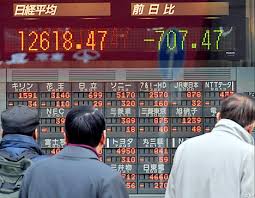
HONG KONG: Asian stocks slid on Thursday on weaker than expected economic data from China and global economic fears, despite growing business confidence in Japan.
Japan's Nikkei index closed down 191.04 points, or 2.04 percent, at 9,191.60, its lowest since November 2009.
The fall came despite a central bank announcement that Japanese business confidence had reached its highest level in two years, as the world's number two economy continues to pull out of its worst slump in decades.
"A global recession is unlikely, but it's obvious recovery momentum is slowing down," Norihiro Fujito, general manager at Mitsubishi UFJ Morgan Stanley Securities, told Dow Jones Newswires.
The index of sentiment among major manufacturers rose for a fifth straight quarter to one point in June from minus 14 in March, according to the closely watched Tankan survey.
Toyota fell 2.27 percent to 3,010 yen after it warned of a possible recall due to an engine fault in its top line Lexus and Crown sedans, adding to a litany of woes in the Japanese auto industry.
Mobile carrier Softbank tumbled 4.38 percent to 2,267 yen after its subsidiary Yahoo Japan was slapped with an additional tax payment order.
In Shanghai, Chinese shares closed down 1.02 percent as weak June manufacturing data weighed on sentiment, dealers said.
The Shanghai Composite Index, which covers both A and B shares, was down 24.58 points at 2,373.79 on turnover of 46.4 billion yuan (6.8 billion dollars).
China's Purchasing Managers Index fell to 52.1 in June from 53.9 in May, the National Bureau of Statistics said Thursday.
In Sydney, Australian stocks closed at their lowest in 11 months on the weaker than expected Chinese economic data and a soft lead from Wall Street, with the benchmark S&P/ASX200 index down 1.49 percent or 64 points at 4,237.5.
The broader All Ordinaries was down 62.1 points at 4,262.7.
"Unfortunately, the beginning of the new financial year was not enough to rid the market of the current bout of global uncertainty and risk aversion it is experiencing, with seemingly little in the immediate future to turn things around," said IG Markets analyst Ben Potter.
Resources stocks experienced a mid-afternoon bounce following reports that the government was nearing a tax compromise with major miners, but closed firmly lower, with Rio Tinto off 2.34 percent and BHP Billiton shedding 1.43 percent.
Singapore's Straits Times Index tumbled 0.53 percent to close at 2,820.35.
Casino operator Genting Singapore was up 0.86 percent at 1.18 dollars and Singapore Telecom was unchanged at 3.04 dollars.
Hong Kong was closed for a public holiday.
Japan's Nikkei index closed down 191.04 points, or 2.04 percent, at 9,191.60, its lowest since November 2009.
The fall came despite a central bank announcement that Japanese business confidence had reached its highest level in two years, as the world's number two economy continues to pull out of its worst slump in decades.
"A global recession is unlikely, but it's obvious recovery momentum is slowing down," Norihiro Fujito, general manager at Mitsubishi UFJ Morgan Stanley Securities, told Dow Jones Newswires.
The index of sentiment among major manufacturers rose for a fifth straight quarter to one point in June from minus 14 in March, according to the closely watched Tankan survey.
Toyota fell 2.27 percent to 3,010 yen after it warned of a possible recall due to an engine fault in its top line Lexus and Crown sedans, adding to a litany of woes in the Japanese auto industry.
Mobile carrier Softbank tumbled 4.38 percent to 2,267 yen after its subsidiary Yahoo Japan was slapped with an additional tax payment order.
In Shanghai, Chinese shares closed down 1.02 percent as weak June manufacturing data weighed on sentiment, dealers said.
The Shanghai Composite Index, which covers both A and B shares, was down 24.58 points at 2,373.79 on turnover of 46.4 billion yuan (6.8 billion dollars).
China's Purchasing Managers Index fell to 52.1 in June from 53.9 in May, the National Bureau of Statistics said Thursday.
In Sydney, Australian stocks closed at their lowest in 11 months on the weaker than expected Chinese economic data and a soft lead from Wall Street, with the benchmark S&P/ASX200 index down 1.49 percent or 64 points at 4,237.5.
The broader All Ordinaries was down 62.1 points at 4,262.7.
"Unfortunately, the beginning of the new financial year was not enough to rid the market of the current bout of global uncertainty and risk aversion it is experiencing, with seemingly little in the immediate future to turn things around," said IG Markets analyst Ben Potter.
Resources stocks experienced a mid-afternoon bounce following reports that the government was nearing a tax compromise with major miners, but closed firmly lower, with Rio Tinto off 2.34 percent and BHP Billiton shedding 1.43 percent.
Singapore's Straits Times Index tumbled 0.53 percent to close at 2,820.35.
Casino operator Genting Singapore was up 0.86 percent at 1.18 dollars and Singapore Telecom was unchanged at 3.04 dollars.
Hong Kong was closed for a public holiday.
Thursday, July 1, 2010 Comments
NEW YORK: US stocks staggered to the end of a dismal second quarter on Wednesday in another low volume session as investors found little reason0to take on risk after conflicting economic data.
Wednesday's session ended like many during the quarter, with a late-day sell-off as buying interest waned and investors sold under-performing stocks in the worst quarter since the market meltdown triggered by the collapse of Lehman Brothers.
"Just pushing all the garbage off the side of the ship," Peter Kenny, managing director at Knight Equity Markets in Jersey City, New Jersey, said of the late sell-off.
The S&P 500 fell below the 1,040 level that it had held since February, breaking out to the downside from what chartists call a very bearish "head and shoulders" price pattern and suggesting a major fall could come in the next five months.
To make matters worse, leveraged short ETFs, widely blamed for a portion of Tuesday's losses, were also cited for the late sell-off as managers piled on bets the market will fall. Those funds shorted the market to keep up with customer demand.
The Dow Jones industrial average dropped 96.28 points, or 0.98 per cent, to 9,774.02. The Standard & Poor's 500 Index slid 10.53 points, or 1.01 per cent, to 1,030.71. The Nasdaq Composite Index fell 25.94 points, or 1.21 per cent, to 2,109.24.
For the second quarter, the Dow fell 10 per cent, the S&P 500 lost 12 per cent and the Nasdaq dropped 12 per cent as worry about Europe's sovereign debt and the sustainability of the US economic recovery caused investors to pull back from the most recent closing highs hit in late April. These losses put Wall Street in correction mode as the second quarter ended.
Technology shares were among the hardest hit, with Google Inc off 2.1 per cent at $444.95 and Apple Inc down 1.8 per cent at $251.53.
Data on Wednesday showed Midwest business activity grew slightly more than expected in June, but a private-sector report showed weakness in employment, a critical part of the economic recovery.
The PHLX Oil Services Sector index .OSX was among the few bright spots, inching up 0.02 per cent, aided by a 1.8 per cent gain in Baker Hughes Inc to $41.57. The index has fallen 20.3 per cent for the quarter and 22.4 per cent since the BP Plc oil spill.
"If you want to go bottom fishing, you do it in the oil services sector. There is going to be consolidation in that group," said Cliff Draughn, president and chief investment officer of Excelsia Investment Advisors in Savannah, Georgia.
"With this moratorium on offshore drilling, they are a dead business."
Even with the accelerated volume heading into the close, volume was tepid, with about 9.21 billion shares traded on the New York Stock Exchange, the American Stock Exchange and Nasdaq, slightly below last year's estimated daily average of 9.65 billion.
Declining stocks outnumbered rising ones on the NYSE by a ratio of about 2 to 1, while on the Nasdaq, about nine stocks fell for every five that rose.
Wednesday's session ended like many during the quarter, with a late-day sell-off as buying interest waned and investors sold under-performing stocks in the worst quarter since the market meltdown triggered by the collapse of Lehman Brothers.
"Just pushing all the garbage off the side of the ship," Peter Kenny, managing director at Knight Equity Markets in Jersey City, New Jersey, said of the late sell-off.
The S&P 500 fell below the 1,040 level that it had held since February, breaking out to the downside from what chartists call a very bearish "head and shoulders" price pattern and suggesting a major fall could come in the next five months.
To make matters worse, leveraged short ETFs, widely blamed for a portion of Tuesday's losses, were also cited for the late sell-off as managers piled on bets the market will fall. Those funds shorted the market to keep up with customer demand.
The Dow Jones industrial average dropped 96.28 points, or 0.98 per cent, to 9,774.02. The Standard & Poor's 500 Index slid 10.53 points, or 1.01 per cent, to 1,030.71. The Nasdaq Composite Index fell 25.94 points, or 1.21 per cent, to 2,109.24.
For the second quarter, the Dow fell 10 per cent, the S&P 500 lost 12 per cent and the Nasdaq dropped 12 per cent as worry about Europe's sovereign debt and the sustainability of the US economic recovery caused investors to pull back from the most recent closing highs hit in late April. These losses put Wall Street in correction mode as the second quarter ended.
Technology shares were among the hardest hit, with Google Inc off 2.1 per cent at $444.95 and Apple Inc down 1.8 per cent at $251.53.
Data on Wednesday showed Midwest business activity grew slightly more than expected in June, but a private-sector report showed weakness in employment, a critical part of the economic recovery.
The PHLX Oil Services Sector index .OSX was among the few bright spots, inching up 0.02 per cent, aided by a 1.8 per cent gain in Baker Hughes Inc to $41.57. The index has fallen 20.3 per cent for the quarter and 22.4 per cent since the BP Plc oil spill.
"If you want to go bottom fishing, you do it in the oil services sector. There is going to be consolidation in that group," said Cliff Draughn, president and chief investment officer of Excelsia Investment Advisors in Savannah, Georgia.
"With this moratorium on offshore drilling, they are a dead business."
Even with the accelerated volume heading into the close, volume was tepid, with about 9.21 billion shares traded on the New York Stock Exchange, the American Stock Exchange and Nasdaq, slightly below last year's estimated daily average of 9.65 billion.
Declining stocks outnumbered rising ones on the NYSE by a ratio of about 2 to 1, while on the Nasdaq, about nine stocks fell for every five that rose.
Subscribe to:
Posts (Atom)