
Tuesday, June 15, 2010
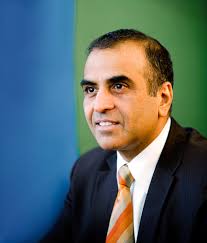
Telecom czar Sunil Mittal, who completed the $10.7-billion acquisition of Zain Africa last week, doesn't like to live with too much debt on his head for too long. Mittal, who runs the country's largest and now the world's fifth-largest telecom services network raised $9-billion debt for the acquisition. Speaking to The Indian Express editor-in-chief Shekhar Gupta on NDTV 24X7's Walk The Talk, Mittal said he plans to mitigate the high debt over the next few years, which could happen either through internal accruals or by selling a stake in his tower company or the parent company.
On other fronts, Mittal is highly critical of the country's regulatory environment on telecom and is all praise for Mukesh Ambani's business skills.
"We will not keep our debt too much for too long. And I don't like to have too much debt on our head. We have plans to mitigate this; these debts will come down over the next few years. Whether it comes down through the process of internal accruals or selling equity in the tower company or in the main company these decisions will happen over a period of time," Mittal said.
While Mittal is upbeat about telecom prospects in Africa where average tariffs are 20 cents a minute, he is deeply upset with regulatory affairs back home. "You know, in the garb of having more players and more competition, we have been pushed against the wall, and it has been very hard on us," Mittal said in reference to the recent Trai recommendations on 2G spectrum pricing, which was preceded by the government giving out licences to eight new telecom operators. This led to the market becoming overcrowded, leaving little spectrum with the government to give everyone and the resultant acute scarcity drove up prices at the recent 3G-wireless broadband auctions.
Mittal - who has never hidden his displeasure over the manner in which the new telecom licences were given out and the subsequent Trai recommendations - said that such measures have affected not just his company, but all established players. "People who have been serving the country for the last 15 years, providing telephony like nobody else in the world has provided, have been hit. We can't say 'don't give new licences' because that looks like we are trying to protect our turf and we have never done that. Bring competition, we are ready to fight everyone in the marketplace as we have been doing for the last 15 years; but do it on level terms, do it on terms that are fair to all," Mittal said.
Highlighting what he felt was lopsided allotment of spectrum, Mittal said: "Spectrum is given in ration. I run 135 million customers here with such a small slice of spectrum and there are people who have similar spectrum with 5 million or 2 million customers. So, there is no equity in that."
Mittal expressed his frustration over Trai recommendations, which linked 2G spectrum prices to 3G, entailing very heavy payouts by telecom operators: "There is a proposal to charge more from those who are established and bigger players. Now, I can't run with too much weight around my neck. I am a better horse in running in the market place and I can take an extra weight around my neck, but I cannot take a rock and run in the marketplace. And that's precisely what the regulations are trying to do. The regulations are being geared towards hurting the large players that they must pay more, but people who have got licences yesterday must pay nothing. I am happy if the country decides to have a punitive regime for telecom, but then let it be punitive for all," he said.
Mittal has been critical of the recently concluded 3G and BWA auctions, calling the bids "unrealistic." He has blamed the expensive bids on spectrum scarcity and faulty auction design. As a result, Mittal feels that the opportunity for providing cheaper broadband and usher in a revolution similar to voice is gone.
"There is no question. If India wants cheaper broadband, that opportunity has been bypassed. We will not have cheaper broadband," Mittal said.
Asked what he found interesting in the Ambani brothers having known them and competed with them in the market, Mittal said: "Well, I would say both have their own unique ways of delivering stakeholder value and I think both have been successful in their businesses. I wouldn't say that I am heavily or regularly in touch with them, but I admire what Mukesh has done and his vision and what he wants to do internationally and his skills of execution are, I would say, unparalleled. I was amazed, even in telecommunications, when he came in and the way he organised his telecom business was quite breathtaking. So, we have to give him credit."
Clarifying his position on his praise for Gujarat CM Narendra Modi at an industry forum in the state which kicked a storm, Mittal said: " All I would say is I was there on behalf of CII and I had to talk about his administrative capabilities. The state's economic activity was shaping up. As you know, it was an event where a lot of industrialists talked about their projects. So, from my point of view, I was talking about the administrative capabilities and the business opportunities that are available in Gujarat. It was nothing more nothing less. Now, you are in the media. I probably feel you got an opportunity that it got played up. But, it was simple: I was a CII nominee there on the stage to talk about the environment of economic activity."
Source: Indian Express Finance
Tuesday, June 15, 2010 Comments
On 6 June, RCom received board approval to sell 26% equity in the company to strategic or private equity investors
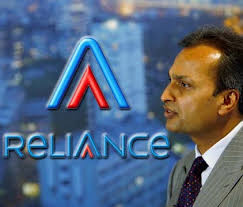 Mumbai: Reliance Communications Ltd (RCom), the telecom services arm of the Reliance Anil Dhirubhai Ambani Group (R-Adag), will spin-off its telecom tower business, the company said on Monday. The telecom tower business is run by RCom subsidiary Reliance Infratel Ltd.
The boards of RCom and Reliance Infratel have approved a proposal to restructure the ownership of Infratel and this will be “implemented through a demerger and/or other suitable value creating options vis-a-vis Infratel’s assets”, an RCom statement said, making it clear that the firm is ready to sell part of its stake in Infratel.
Without getting into details of possible buyers and valuation, the statement added that the “consideration” would be received “in a combination of cash and stock”.
It has been reported on Monday that Infratel, in which RCom owns 95%, might bring in a potential investor ahead of a proposed stake sale in RCom to improve the valuation of the flagship firm by reducing its debt burden.
On 6 June, RCom received board approval to sell 26% equity in the company to strategic or private equity investors.
RCom’s shares rose 3.71% on the Bombay Stock Exchange on Monday to close at Rs179 even as the bellwether index Sensex ended the day 1.6% higher. The company made the announcement after market hours.
“RCom and Infratel are at an advanced stage of discussions with several domestic and international, strategic and financial players to finalise the proposal and it is anticipated that...a transaction would be announced shortly,” RCom said in its statement.
Infratel owns and operates 54,000 towers across the country, with RCom as the anchor tenant. A back-of-the-envelope calculation values the towers at around Rs25,000 crore.
RCom said the cash infusion would lead to substantial reduction of consolidated debt and improved leverage ratios for RCom, while the equity participation would enable future participation in growth projects.
The proposal would lead to consolidation in the tower infrastructure business, resulting in scale benefits and operational synergies, it said.
“I am delighted that this endeavour will greatly benefit Reliance Communications through substantial debt reduction, and enhanced financial flexibility,” said Anil Ambani, chairman of RCom.
“I am personally looking forward to an era of healthy co-operation and collaboration with existing and new players, especially recent winners of 3G and BWA (broadband wireless access) spectrum.”
Reliance Industries Ltd (RIL), controlled by Anil Ambani’s older brother Mukesh Ambani, on Friday announced that it would acquire a 95% stake in Infotel Broadband Services Pvt. Ltd, which won a licence to roll out broadband wireless services in 22 telecom circles across India.
An R-Adag spokesperson then said that “we look forward to offering our services to RIL and other BWA players, even while we compete for customers in the market place...”
RCom said the independence and neutrality of Infratel would help attract new 2G, 3G and BWA players as customers.
An industry expert who is familiar with the situation said RCom could be in talks with firms such as GTL Infrastructure Ltd and American Tower Corp. (ATC).
“It might be a combination of GTL and ATC since GTL alone would not have the necessary cash to invest in Infratel. Another possibility is that RCom strikes a deal with Mukesh Ambani’s Reliance Industries,” added the person, who did not want to be identified. An RCom spokesperson declined comment on the identity of a potential buyer.
“This exercise is obviously aimed at getting better valuation for RCom through deleveraging its books, but that will depend on who the strategic investor is going to be,” said a
Mumbai-based analyst with a foreign brokerage who did not want to be named as he is not authorized to speak to the media. “The investor will have to be somebody with longer than two-three year view of RCom.”

Chief economic adviser Kaushik Basu said that rising food prices had virtually stabilized and inflation is now being driven by manufactured products such as iron and steel
Inflationary pressure has shifted to manufactured products from food, a trend that will make it more difficult for the Reserve Bank of India to stanch rising prices without hurting economic growth.
Wholesale price inflation in May accelerated faster than expected to 10.16%, according to data released on Monday. Chief economic adviser Kaushik Basu said that rising food prices had virtually stabilized and inflation is now being driven by manufactured products such as iron and steel. Rising domestic demand is fanning inflation and mounting pressure on the central bank, which meets July end, to tighten monetary policy.
Indian Rupee edges lower due to choppy start to domestic share market and dollar gains
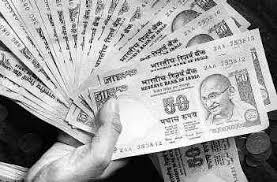 Mumbai: The Indian rupee retreated on Tuesday from the previous session’s two-week high as choppy shares failed to provide clarity on fund flows, while the dollar’s gains against major currencies also weighed.
At 10:35am, the partially convertible rupee was at Rs46.65/66 per dollar,0.35% weaker than Monday’s close of Rs46.4850/4950 when it hit 46.40 during trade, its highest since 31 May.
“There is a little profit taking after the big move over the last week. INR will remain in a tight range now. I guess Rs46.25 to 47.25 should hold with advance tax numbers out this week,” said Nitesh Kumar, an inter-bank dealer with Development Credit Bank.
“A large part of the equity market expectations will be met which may lead to profit booking,” he added.
Companies in India pay quarterly taxes this week and higher payments would suggest expectations of better profits.
The main stock index was trading down 0.2%, in line with weak Asian peers, as Moody’s downgrade of Greece’s debt hit investor sentiment.
Foreign fund moves into and out of the sharemarket are a key determinant of the rupee’s fortunes. So far in June, foreigners have bought a net $358 million worth of shares, after dumping around $2 billion in May.
The funds are net buyers of about $5 billion in 2010.
Dealers said they would also watch the dollar’s moves versus major currencies for cues. The index of the dollar against six major currencies was 0.24% higher.
Most Asian currencies also dropped versus the dollar.
The euro’s rally showed signs of fading on Tuesday, with investors taking profits and sentiment towards the single currency staying fragile as debt worries returned after Moody’s cut Greece’s credit rating to junk grade.
One-month offshore non-deliverable forward contracts were quoted at Rs46.79, weaker than the onshore spot rate.
In the currency futures market, the most traded near-month dollar-rupee contracts on the National Stock Exchange and MCX-SX were both at Rs46.72, with the total traded volume on the two exchanges at about $1.2 billion.
Reuters
Greece stands at the center of Europe’s sovereign credit crisis which roiled global financial markets and pushed the European Union and the International Monetary Fund to cobble together a massive bailout plan.

“Greece no longer meets the minimum credit criteria of BBB-/Baa3 by either S&P or Moody’s for the World Government Bond Index (WGBI),” Citigroup said.
Moody’s earlier on Tuesday cut Greek government bond ratings four notches to Ba1 from A3, the second ratings agency to regard the Hellenic Republic’s credit as non-investment grade.
In late April, Standard & Poor’s cut its rating on Greece to BB-plus, an equivalent junk status.
“If the credit ratings remain below investment-grade on June 24, 2010, the fixing date for the July 2010 Profile, Greece will be removed from the WGBI at the end of June,” a memo, dated 14 June, said.
Greece stands at the center of Europe’s sovereign credit crisis which roiled global financial markets and pushed the European Union and the International Monetary Fund to cobble together a massive bailout plan.
The aid mechanism for Greece is worth 110 billion euros ($132.4 billion) and a safety net for other euro zone countries is worth 500 billion euros.
Greece has a debt load forecast to reach 149 percent of gross domestic product by 2013. It is expected to see its economy slump by 4% this year after a 2% drop in 2009, as tax increases and cuts in wages and pensions take a toll.
Citigroup said there are currently 23 Greek government bonds in the “June 2010 WGBI profile” with a total market value of $213.6 billion. These bonds represent 1.34 percent of the overall WGBI, the memo said.
The bonds would also be removed from the EMU Government Bond Index (EGBI) and the World Broad Investment-Grade (WorldBIG) Bond Index at the end of June, Citigroup said.
“We will continue to track the Greek Government Bond Index as one of the WGBI - Additional Market Indexes starting with the July 2010 profile,” the memo said.
The WGBI index is a major benchmark used by investment funds. Once removed, a country can become a candidate for re-entry if it meets requisite criteria. This process however takes a minimum of six months.
Separately, JPMorgan Chase said in a research note dated June 15 that Greek sovereign debt, as a result of the Moody’s downgrade, were now eligible for its Emerging Markets Bond Index Plus.
At present only the Greek 4.625% 2013 bonds are eligible for the EMBI+, however they “don’t meet the necessary liquidity criteria for inclusion,” JP Morgan said. The bond was last bid at a price of 82.167, yielding 12.002%, according to Thomson Reuters data.
“Greece is not eligible for the EMBIG/Diversified series due to its high income status,” the firm said.
Daniel Bases / Reuters
Sunday, June 13, 2010
To compile this list, over 6,500 actively traded primary securities across 13 tech sectors were initially considered.
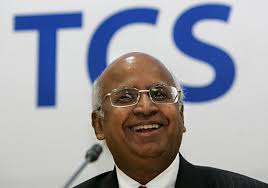 Mumbai: IT major Tata Consultancy Services (TCS) on Sunday said it has been ranked fifth overall and topped the list for IT services in Bloomberg Businessweek’s 12th annual ‘Tech 100´, a ranking of the world’s best performing tech companies.
To compile this list, over 6,500 actively traded primary securities across 13 tech sectors were initially considered.
Companies which did not meet the requirement of minimum capitalization of $1 billion, revenue of at least $500 million, an under 5% decline in revenues from 2008 and 2009 and less than a 50% drop in stock value in the year ending 30 April 2010, were eliminated, a press release issued here stated.
The remaining companies’ revenue and operating income was normalised in order to fairly compare and rank them based on these metrics, weighted at 35% each, as well as total shareholder returns and employee growth, weighted at 20% and 10%, respectively.
The top hundred tech companies were ranked in order of the best weighted scores. With a shareholder return of 150%, TCS jumped from 30th position on last year’s list to fifth place this year, the release said.
Sunday, June 13, 2010 Comments
Media baron boards SpiceJet with Rs 750 cr
Media baron Kalanithi Maran of Sun TV Network Ltd is close to signing an agreement to purchase a nearly 40% stake in India’s second largest low-fare carrier SpiceJet Ltd from its promoter Bhupendra (Bhulo) Kansagra and distressed-assets buyout specialist Wilbur L. Ross for around Rs800 crore, two investment bankers familiar with the development said.
This values the company at Rs2,000 crore against a market value of Rs1,400 crore going by Thursday’s closing price of SpiceJet shares.

Maran, who runs 20 television channels and two general newspapers in south India, will also make an open offer to SpiceJet’s minority shareholders to acquire an additional 20% stake. Under Indian takeover rules, any acquisition of 15% or more triggers an open offer and the acquirer needs to make an offer for at least another 20% of the target company. Edelweiss Capital Ltd is exclusive adviser to the deal.
The shares of SpiceJet fell 0.52% on the Bombay Stock Exchange on Thursday to close at Rs57.85 apiece even as the exchange’s bellwether Sensex index rose 1.59%.
Maran, elder brother of Union textiles minister Dayanidhi Maran, has been keen to enter the aviation industry and had even obtained a no-objection certificate from the ministry of civil aviation to run a non-scheduled air passenger service. Sun Network’s board had given a go-ahead for its future plans to enter civil aviation and import aeroplanes.
In December 2009, Maran held discussions with Star Aviation Pvt. Ltd, which owned a licence to start a regional airline in south India.
“As a first step, Ross will convert his foreign currency convertible bonds (FCCBs) into equity shares and will own 27.11% stake in the low-cost airline. At the second stage, both Ross and Kansagra will sell their 40% stake to Maran,” one of the bankers said. Ross had bought convertible bonds of SpiceJet in July 2008, which will be converted into equity at Rs25 a share, a price that ensures that his exit in favour of Maran will be a profitable one.
Kansagra owns 12.89% in the company through Royal Holding Services Ltd.
Among the other major shareholders, the Tata group owns 6% stake.
Despite repeated efforts, Mint could not reach out to Sun TV Network executives, Kansagra and India representatives of WL Ross for comments on this story.
“As a policy, we do not comment on market rumours and speculations,” said a SpiceJet spokeswoman, answering Mint’s query.
“Maran had held a series of discussions with SpiceJet promoters for months,” the second banker said.
Foreign direct investment (FDI) limit in Indian airlines is 49%. Currently, foreign ownership in SpiceJet is 27.5% and if Ross was to convert his FCCBs to equity, then the FDI limit will be breached.
“We have structured the deal in a way to take care the FDI limit is not violated,” said the first banker.
The airline’s other foreign shareholders—Istithmar PJSC, the investment arm of Dubai
World, and Goldman Sachs—can take part in the open offer, the banker said, adding that Maran is ready to shell out around Rs1,200 crore to own up to 60% stake.
Both Istithmar and Goldman Sachs own FCCBs that can be converted into equities.
In early February, Istithmar, an anchor investor in SpiceJet, sold a bulk of its 13.39% stake to a clutch of domestic funds, including DWS Invest BRIC Plus Fund, Reliance Mutual Fund and Birla Mutual Fund.
“A deal is in the works and could be concluded in a few days,” said the same banker who had worked with SpiceJet to raise $80 million (Rs376 crore today) from Ross through his eponymous private equity fund in July 2008, and persuaded investment bank Goldman Sachs to invest $20 million.
Industry peers believe the change in ownership will help SpiceJet expand operations.
“Till now, SpiceJet’s fragmented ownership has prevented the airline from expanding its fleet as there was always a sense of uncertainty in the ownership, with various promoters looking to exit and a new set of promoters wanting to come in,” said a senior executive with a leading rival private airline, who did not want to be named. “The delay for the next round of fleet acquisition comes at a time when its arch-rival IndiGo has obtained the government approval to buy 150 more planes in addition to 100 what they had ordered,” he added.
SpiceJet has plans to add four planes this fiscal year.
In April, SpiceJet had a market share of 12.6% among domestic carriers. IndiGo is the largest low-fare carrier with a market share of 15.7% in April.
Gurgaon-based SpiceJet had posted a Rs61.4 crore net profit in fiscal 2010. It had held roadshows to raise $75 million in April by selling new shares to domestic fund houses ahead of launching international flights. Its board has even cleared a proposal to tap the international market to raise capital.
“For SpiceJet, what is good is a well entrenched group of investors or a promoter who can further the strategic interests of the company. W.L. Ross is a turnaround specialist and, therefore, cannot be construed as a promoter. They are financial investors and will seek their exit when the turnaround is complete,” said Mahantesh Sabarad, senior vice-president (equity research) at domestic brokerage Fortune Equity Brokers (India) Ltd, who has been tracking the stock.
Referring to Maran’s business entity’s interest in SpiceJet, he said, “This appears to me only a financial interest and not a strategic interest in SpiceJet. This still means SpiceJet will not find a new promoter just as yet.”
“Any investor would be sinking his money in Indian low-fare carriers as they need to change their business models,” said Nawal Taneja, professor and chairman at department of aviation, Ohio State University.
“Copying a Western model need not be necessarily good for an Indian airline,” added Taneja, who has 40 years of experience in working and advising for international airlines, and is the author of six books on the global airlines industry.
Reliance Industries buys 95% stake in Infotel Broadband for Rs 4,800 cr

Mukesh Ambani owned Reliance Industries has bought 95% stake in Infotel Broadband for Rs 4,800 crore. Infotel Broadband will now be a subsidary of Reliance Industries. Shares of RIL have been buzzing of late on rumours of foray in the telecom sector.
Unlisted Infotel Broadband Services is the only firm to win broadband spectrum in all 22 zones in India in an auction that ended on Friday. The firm is paying Rs 12,848 crore ($2.7 billion) for the spectrum, the government said. Announcement of the deal came within hours of Infotel emerging as the sole winner of broadband spectrum for the entire country. Reliance would pay this fee, a source direct knowledge of the matter told Reuters on Friday.
This marks Mukesh Ambani group's entry into telecom sector in less than a month of he and his younger brother Anil reaching a truce by ending all the no-compete agreements to enable each other an opportunity to enter and invest in areas hitherto barred under the family settlement reached in 2005 for division of Reliance empire.
RIL will invest Rs 4,800 crore by way of subscription to fresh equity capital at par to be issued by Infotel Broadband, the company said in a statement.
The share prices of both HFCL (promoted by Mahendra Nahata) and HFCL Infotel (promoted by son Anant Nahata) today rose by the maximum limit and closed at Rs 11.39 and Rs 10.14 a share respectively. RIL's shares also surged over three per cent to close at Rs 1,046.25 a share.
Friday, June 11, 2010
April industrial production grows 17.6% vs 13.5% (MoM)

THE COUNTRY’S industrial output rose for the seventh consecutive month in April at a much faster than expected rate of 17.6% from 13.5% a month earlier led by growth across all sectors. CNBC-TV18 had expected IIP to come in at 14%.
The manufacturing sector in April grew 19.4% as against 0.4%, while consumer durables surged to 37% versus 17.6%. The mining sector’s growth came in at 11.4% in the month versus 3.4%. There was strong growth in capital goods sector, which rose 72.8% from negative 5.9% on year-on-year basis and the consolidated non-durable jumped 6.6% as against negative 10.5%.
Finance Minister Pranab Mukherjee said that industrial growth was encouraging. However, economists said the data is unlikely to prompt any immediate policy action from the Reserve Bank as worries over Europe's debt crisis and the health of the global economic recovery are likely to prevent any policy tightening before the next scheduled quarterly review on July 27.
"From June onwards due to the strong base effect there is going to be some normalisation of growth rates," said Rupa Rege Nitsure, Chief Economist at Bank of Baroda.
Commenting on robust capital goods numbers, Jehangir Aziz Chief Economist at JPMorgan said, “If you would look at the numbers of last time on a seasonal adjustment basis, capital goods activity actually fell. So this (72.8% growth) is a good sign of the start of an investment cycle. This turnaround is earnest and I see momentum continuing in the month of May.”
Robust consumer demand
However the consumer durable numbers, according to Venugopal Dhoot Chairman and
Managing Director of Videocon, were not very surprising. “Since November the growth has been over 30%. In January it was 46% and now it is 37%. The consumer durable industry has taken good shape and credit goes to the stimulus package announced by the government in January 2009. Besides, the demand is good, interest rates are lucrative and the government has spent well on the below poverty line (BPL) bracket and people at the bottom of pyramid. We are seeing the impact last years budget where the government put money into the hands of the people. You will see that in July-August the growth in consumer durables will be similar to capital growth industry if there are good rains,” he reasoned.
Where are the figures headed?
On the outlook for FY11, Mridul Saggar, Chief Economist, Kotak Institutional Equities, said, “There is a possible upside considering that much growth in consumer durables has come from not much support from bank support to retailers. However, we need couple of more months to see if the actual investment activity has accelerated at grassroot level and to say if 10% growth will continue. But we are still skeptical about global scenario.”
"If investment growth picks up, then, for the year as a whole, IIP can be expected somewhere between 8.5-9% in FY11. This surely gives more elbow room to the Reserve Bank of India to pursue monetary tightening," Nitsure added.
(With inputs from Reuters)
Friday, June 11, 2010 Comments

You may have stood outside, watched the dancers and wondered when was a good time to join the equity party. You may have taken a step forward, heard the thunderous music and then jumped backwards.
With the indices marking record highs in 2007, the equity party was certainly one where latecomers were kept out. Even as the party continues to be loud, don't be afraid to join in. But, be careful and don't get swept off your feet.
As the new year begins, let safety be your resolution. Stocks Catalog defines five ways of making equity investing safer.
1. Pick 'safe' stocks. Stock picks are paramount in any kind of market, and especially so in a market like ours that has had a significant run up. The market is now trading at around 20 times one-year forward earnings, an unprecedented level. Even at the best of times earlier, valuations have not exceeded 16 times one-year forward earning.
The first mistake to avoid is to assume that the cheapest way to enter this market is through initial public offers.
Says Gaurav Mashruwala, a Mumbai-based financial planner: "Many people say that the market is too expensive and putting money in an IPO would be cheaper. That is a wrong strategy. Companies just getting listed are more risky than established blue-chips."
The safest way to enter the market is by investing in large companies, ideally those that are part of the market index.
Once you gain some experience, you can diversify. Even then, it's better to stick to well-known players. Try and get research reports from reputed brokers. Learn to read balance sheets and understand the industry the company operates in. Ignore hype and, most importantly, do not depend on 'market tips' your friend always gives.
Another important factor to investing safely is knowing when to sell.
2. Read between the lines. Beware of hype. One of the recent trends to emerge from trading patterns in the last few months is that delivery-based transactions are sometimes less than half of actual volumes in the market.
This indicates that the price rise in a lot of stocks is purely speculative and not backed by any fundamentals. This is true even for large-cap, well-known stocks.
Try and understand the reason why certain scrips are gaining. Check data from the exchanges.
If volumes for delivery constitute a major portion of trades transacted during a period, it indicates genuine buying and selling. If only day traders or speculators are interested in the stock, you may be buying into an artificial demand.
As the Sensex reaches unthinkable levels, massive volatility is par for course. Do not get caught on the wrong foot.
3. Do not over-leverage. You had a good run last year and have substantially improved your portfolio. You wish you had more funds to make an even bigger killing. Your broker suggests margin trading. At just 10 per cent of the investment you get to take a position on a stock that is definitely going up. Sounds great? Well, resist.
Even brokers are of the opinion that the current market is not one for retail investors to try and test their skills in.
As our bonuses get increasingly aligned to foreign ones, short-term market movements will be driven by forces we cannot foresee or predict. Avoid buying stocks to trade them in a few days, and even more importantly, avoid over-leveraging yourself.
If your call goes wrong and you have utilized the margin trading facility, you will have to cough up the remaining 90 per cent overnight. You may have to liquidate other investments or even borrow at a higher cost to cover up the losses.
"Margin trading is not safe even in the most placid of market conditions. Though we do offer this facility, it is inadvisable to use it in the current market conditions. In 2008, we expect more volatility, not ideal conditions for a novice to leverage market positions," says the head of a large broking house.
4. Be vigilant. As more investors are entering the market, regulators, exchanges and depositories have been tightening the rules. However, this does not mean that all fraud is eliminated. Choose your broker carefully. If you are picking the stocks yourself, then you can go with the cheapest broker. If you are going to rely on your broker for investment advice, then choose one that has the best research capability.
Even if you have picked a reputed broker, be vigilant. After every buy or sell transaction, check your contract note. It should have the order number, trade number, trade time, quantity, price and brokerage, and should be signed by the authorised persons.
If you have an online broker, check your depository participant status. Shares must reach you on the second day after you have put in your buy order and cash must be in your account the second day after you sell.
Keep a daily check on your DP account even if you have not transacted. Sometimes brokers move your shares to their common pool and transact on them. Call them and ensure that they reverse this. If a record date for dividend payment has been set on the day your broker does this, you may lose the dividends.
5. Be diligent. The best way to ensure the safety of your money is to be diligent. Get yourself organised and keep your papers in order. If you are applying for an IPO, keep a copy of your application form and cheque.
If you are buying and selling through a broker, check your contract notes and file them away safely. If you have all your documents in one place, it is easy for you to spot fraud and take action against it.
Market regulator Securities and Exchange Board of India as well as the Bombay and National Stock Exchanges have investor complaint cells. You can write to them and follow up to ensure that action is taken against the broker or the registrar if you face problems with your transactions or IPO allotment. But, for this, you need to have all your evidence in place and in the right order.
Stockmarket investing is fraught with risks and not for the faint hearted. But facing the risk of an intelligent and calculated transaction going wrong is one thing, and having to lose your money because of greed or laxity is another.
If 2006 was a year when even your pet dog could stock pick and make a decent profit, 2007 has taught us that, ultimately, markets favour the intelligent. Indications are that 2008 will teach us more of this. Brace yourself and enjoy the party.
Subscribe to:
Posts (Atom)